
Ante-Post Betting in Horse Racing: When Early Prices Offer Real Advantage
 Available in US
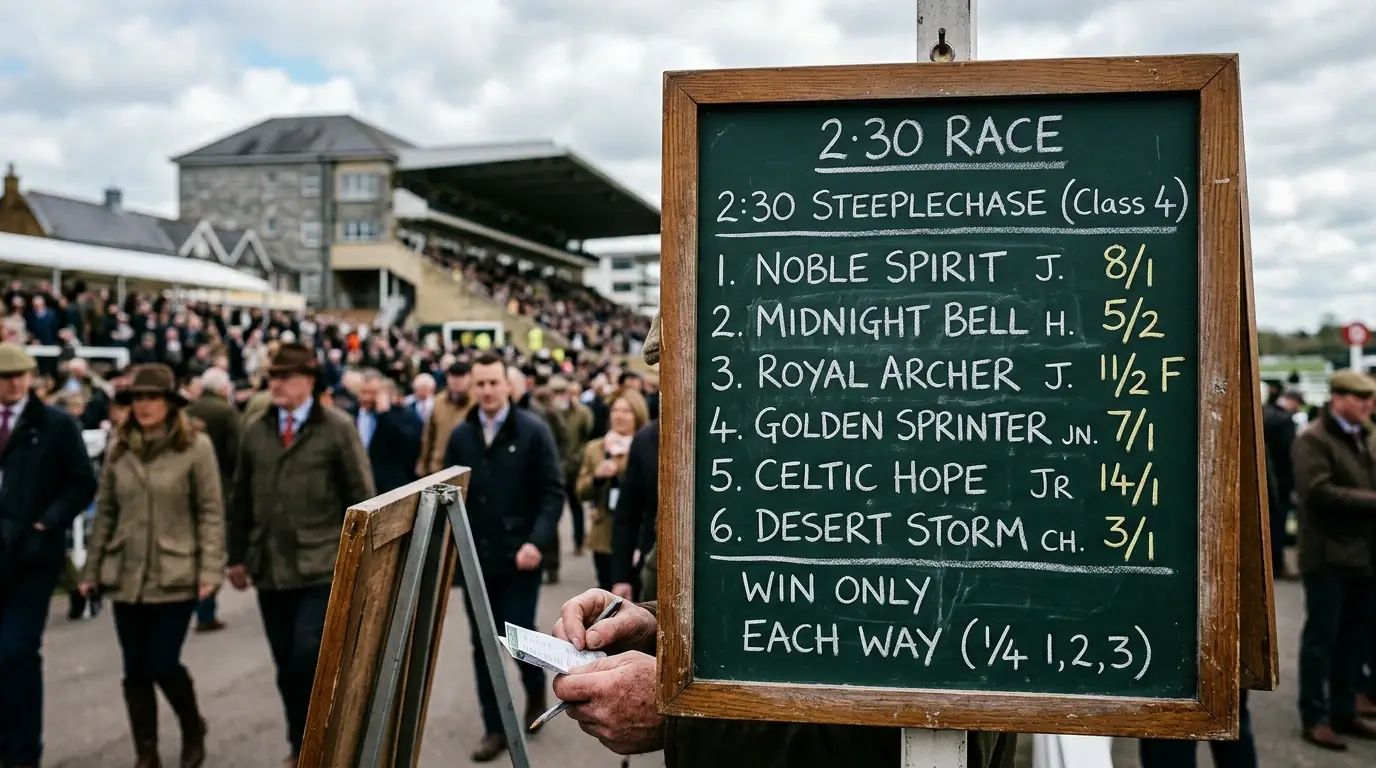
The first ante-post bet I ever lost was a 20/1 punt on a Cheltenham Gold Cup horse five months out. He went lame in February, never made the start, and my £40 vanished without the consolation of even watching him try. The bookmaker kept my stake because that’s how ante-post works. I learned more from that single losing £40 than from most of my winning bets that year — and ever since, I’ve treated ante-post as one of the most strategically important parts of the betting calendar.
Ante-post is the practice of betting weeks or months before a race runs, at prices that reflect the field’s uncertain composition. The upside is straightforward — bigger prices than will ever be available closer to the event. The downside is equally clear — your horse may not run, and standard ante-post rules say you lose your stake. Knowing when the maths favours taking that risk, and when the better play is to wait, is the entire skill of ante-post betting.
This article unpacks the ante-post rules around non-runners, when to bet for optimal value, how to quantify the non-runner risk you’re accepting, and when Non-Runner No Bet offers materially change the calculation.
Ante-Post Rules: What Happens If Your Horse Withdraws
Standard ante-post betting carries one fundamental rule that catches new punters out repeatedly: if your horse doesn’t run, your stake is lost. There’s no refund. No conversion to favourite. No partial return. The bet is dead the moment your horse is officially withdrawn or declared a non-runner.
That rule sounds harsh because it is. The justification on the bookmaker’s side is fair enough — they price the horse at long odds precisely because they’re accepting the risk that the runner will eventually start. Charging for that early price commitment is how they balance their book. From the punter’s perspective, the trade is clear: you accept non-runner risk in exchange for prices that closer-to-the-race money won’t see.
The withdrawal mechanism varies by stage. Up to a certain point — usually the final declaration stage, 24 to 48 hours before the race — a horse can be removed from the entries without much consequence. Once final declarations are made, withdrawal becomes more public, but the ante-post bet is still lost. The only exception in classic ante-post is the rare situation where the race itself is abandoned, in which case all stakes are typically refunded.
The non-runner risk varies dramatically by horse and by race. For top-class horses being campaigned aggressively at multiple targets, the risk is real — perhaps 20 to 30% probability of not making the originally identified target. For horses with one clear goal and a clean training profile, the risk drops to maybe 5 to 10%. For lightly-raced improvers running on a flexible programme, the risk can be 40% or higher. Pricing these probabilities is the foundation of disciplined ante-post.
Non-Runner No Bet (NRNB) offers change this dynamic completely. Under NRNB, your stake is refunded if your horse doesn’t run, so non-runner risk disappears. The trade-off is that NRNB prices are shorter than standard ante-post prices on the same horse, because the bookmaker is absorbing the withdrawal risk that the punter would otherwise carry. Knowing when NRNB is offered, and how much shorter the price has been adjusted, is the practical maths of ante-post.
Timing Your Ante-Post Bets: Optimal Windows
The price journey of an ante-post horse from initial market to race day follows patterns that vary by race type but repeat reliably enough to be useful. Reading those patterns and entering at the right moment is what separates ante-post bettors who profit from those who romance themselves into losing stakes.
For major festival races — Cheltenham, Aintree, Royal Ascot — the price formation cycle typically opens six to nine months before the event. Initial prices are based on the previous season’s form and rumoured campaign plans. These early prices are sometimes generous, particularly on improvers whose ceilings haven’t yet been established. They’re also sometimes wildly optimistic, with bookmakers pricing aggressively to encourage early money in the books.
The first major repricing usually happens after a horse’s first significant run of the new season. A horse that runs well in October at a major prep race will shorten markedly in the Cheltenham market by November. A horse that disappoints in the same race will drift just as sharply. This volatility window — roughly October to January for spring festivals — is where the best informed ante-post bets are typically placed.
Cheltenham Festival pricing concentrates dramatically in the final six weeks. The Festival itself generates a peak audience of 1.8 million on Gold Cup Day, and that level of public attention compresses prices in ways that earlier markets don’t experience. Backing a horse at 14/1 in early January and watching the same horse trade at 6/1 by Festival Tuesday is a routine ante-post journey. Backing the same horse in late February at 10/1 captures none of that compression.
The optimal entry window for established Festival horses with proven course form is usually November to early January. Their connections will have settled on a target, the prep race will have either confirmed or refuted the campaign plan, and the price will still reflect uncertainty about field composition. By February the certainty is much higher and the price reflects it.
For Royal Ascot — which attracted around 5 million TV viewers across its five days in 2025, with last-day viewership up 20% — the cycle is shorter but follows similar patterns. Prices form in March and April, compress through May, and reach their settled state in the week before the meeting. Backing fancied Royal Ascot horses in April is usually the sweet spot for value if you’re confident in their target.
The dangerous window across all races is the final two weeks before the event. By then, the public information is fully priced, the late money has refined the market, and apparent value usually carries hidden information you don’t have. Late ante-post bets at “interesting” prices are most often warnings disguised as opportunities.
Risk vs Reward: Quantifying the Non-Runner Discount
The maths of ante-post comes down to a single calculation: is the price advantage you’re getting now larger than the expected loss from non-running risk? Putting numbers to that question makes ante-post strategy tractable rather than mystical.
Walk through an example. You’re considering a horse at 12/1 standard ante-post for the Champion Hurdle in February. The same horse at the morning of the race, you estimate, will be priced around 6/1. Without considering non-runner risk, the ante-post bet captures roughly double the eventual race-day price, which is a substantial edge.
Now factor non-runner risk. You estimate the horse has a 20% probability of not running between now and race day. Adjust the effective price. A £100 bet at 12/1 carries £100 × 0.80 = £80 of effective stake (because 20% of the time you lose nothing more than the stake) — but you’re betting £100 to potentially win £1,200. Adjusted for non-runner risk, the bet has an 80% probability of being live at race day, when it’s effectively worth a 12/1 punt; and a 20% probability of zero return. Expected return per £100 stake: 0.80 × (12/1 × 0.5) + 0.20 × 0 = £4.80 net positive expected value, assuming you assess the horse’s true winning probability at 1 in 13 (slightly better than the 6/1 race-day price suggests).
The discipline is in honestly pricing both inputs. Most punters underestimate non-runner probability and overestimate horse winning probability. Both errors compound in the same direction — making ante-post bets look better than they are. The correction is to start with conservative estimates: assume non-runner risk is 5 percentage points higher than gut instinct suggests, and assume winning probability is 3 percentage points lower than instinct suggests. If the bet still looks positive after both corrections, it’s a genuine edge.
The NRNB calculation is simpler because non-runner risk drops out. The relevant question is whether the NRNB price is still better than the eventual race-day price. NRNB on a 12/1 horse might bring the price down to 9/1 — still better than the projected 6/1 race-day mark, and now with no non-runner exposure. For most ante-post bets in the four to eight weeks before a major race, NRNB is the rational play. Standard ante-post earns its keep further out, before NRNB is offered, when the price advantage is large enough to absorb non-runner risk.
Non-Runner No Bet Offers and When They Are Worth Taking
Non-Runner No Bet offers transformed ante-post betting when major bookmakers started introducing them as standard for festival races. They reduced the risk profile dramatically, making ante-post accessible to disciplined punters who previously avoided the format because of withdrawal exposure.
The timing of NRNB introduction varies by race. For the biggest events — Cheltenham Gold Cup, Champion Hurdle, Grand National — NRNB usually appears six to eight weeks before the race. For other Festival races and major handicaps, NRNB often kicks in three to four weeks out. For smaller ante-post markets, NRNB may not appear at all, leaving standard ante-post as the only option.
The decision to take an NRNB price versus wait for the race-day market depends on what you expect to happen to the price. If your assessment is that the horse’s price will shorten between NRNB and race day, NRNB is the better play — you lock in a longer price without non-runner risk. If you expect the price to drift, waiting for race day will give you a longer price for less commitment.
The 2026 Remote Gaming Duty increase from 21% to 40% is a material factor here. Industry analysis suggests the harmonised tax change will cost the horse racing sector around £66 million per year and potentially 2,752 jobs. Higher taxes pressure bookmaker margins, which in turn pressures the promotional offers — including NRNB enhancements and best-odds-guaranteed concessions — that have made modern ante-post viable. The expectation is that NRNB will continue but may apply later in the race cycle than before, and that the gap between standard ante-post and NRNB prices may widen as bookmakers price non-runner risk more conservatively. Backing under generous NRNB terms while those terms still apply is increasingly the rational ante-post play for the 2026 calendar.
For the broader question of how regulatory and tax changes affect punter strategy, my full guide to UK gambling regulation and horse racing covers the wider implications of the policy environment for everyday bettors.
The Practical Ante-Post Framework
The ante-post bets that have paid me back over the years all share the same characteristics. A horse with a clear, single, well-defined target. A trainer known for getting horses to their planned races. An entry window between three and five months out, when the price still reflects uncertainty but the campaign plan is established. A price advantage of at least 50% over what I expect the race-day market to settle at.
The ante-post bets that have lost me money share equally consistent features. Speculative late entries with no clear target. Horses with injury histories or fragile profiles. Late ante-post at apparent value prices that turned out to reflect inside information about non-running. Cluster bets across multiple horses in the same market that absorbed too much of my bankroll for a single race outcome.
The framework I now follow: limit ante-post exposure to no more than 15% of my National Hunt budget or 10% of my flat budget at any one time. Spread ante-post bets across multiple targets rather than concentrating in any single market. Take NRNB whenever it’s offered on a horse I want to back, unless the standard ante-post price is more than 30% better than the NRNB price. And never bet ante-post on a horse I haven’t watched run live or on video at least twice.
Ante-post rewards patience, discipline, and the willingness to accept that some stakes will simply disappear without compensation. The bigger prices are real and they compound across a season for punters who use them well. But the bigger losses are equally real for punters who treat ante-post as romance rather than strategy.
What does non-runner no bet mean in ante-post markets?
Non-Runner No Bet (NRNB) means your stake is refunded if your selection doesn’t run in the race. It removes the withdrawal risk that standard ante-post carries, in exchange for slightly shorter prices than would otherwise be offered. Major bookmakers typically introduce NRNB for big races six to eight weeks before the event.
How far in advance should I place an ante-post bet for the best value?
For major festival races, the optimal window for established horses with proven form is usually three to five months out — late autumn for spring festivals, mid-spring for summer meetings. The price still reflects field uncertainty but the campaign plan is established. Anything later than four weeks out usually has the available value priced in.
Created by the ”Horse Racing bet Strategy” editorial team.