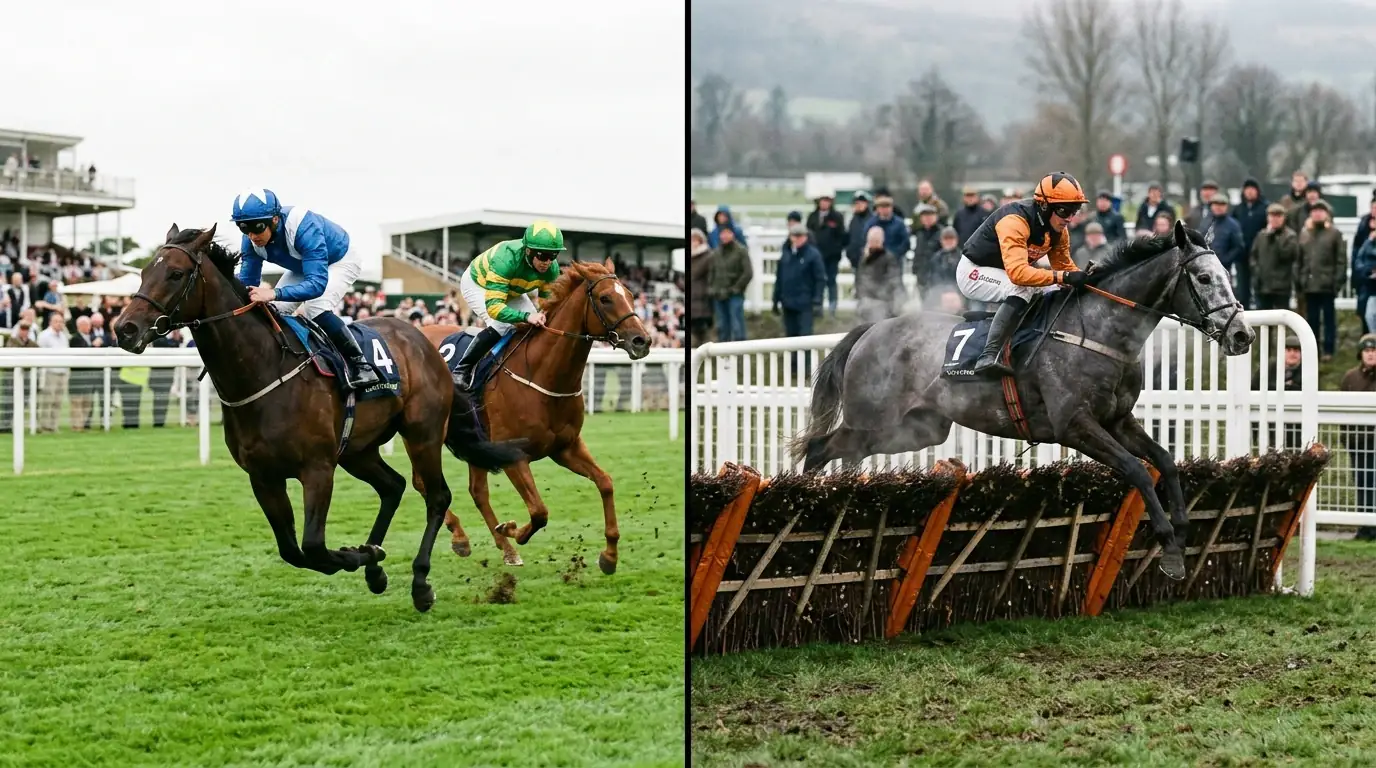
Horse Racing Form Analysis: A Systematic Approach to Reading the Racecard
 Available in US
Table of Contents
- Decoding Form Figures: What Each Symbol Tells You
- Going Conditions and Their Impact on Race Outcomes
- Class Drops, Distance Changes and Course Suitability
- Trainer and Jockey Statistics That Actually Matter
- Using Speed Ratings and Time Figures
- Weight, Handicap Marks and the Official Rating
- Putting It Together: A Pre-Race Form Checklist
- Frequently Asked Questions
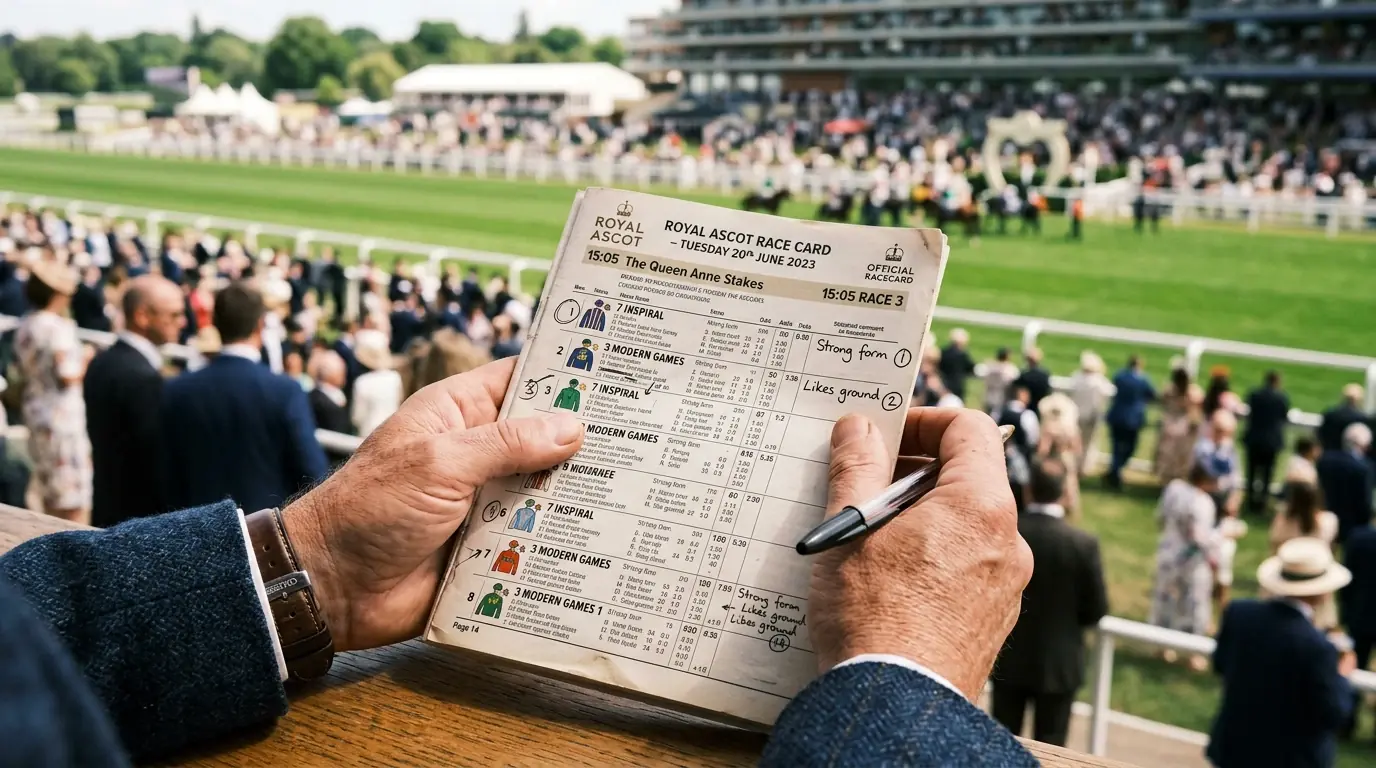
The racecard used to terrify me. Rows of numbers, letters, and abbreviations that looked like a coded language designed to keep outsiders out. My early bets were based on horse names I liked or jockeys I recognised from television. It took about six months and a shrinking bank balance before I sat down and actually learned what those symbols meant — and when I did, the effect was immediate. Races stopped being a lottery and started being a puzzle with data attached to it.
Form analysis is the foundational skill of serious horse racing betting. It is the process of reading a horse’s racing history — its recent results, the conditions it ran under, the class it competed in, the people who trained and rode it — and converting that history into a judgment about how it will perform today. Every strategy, from value betting to exchange trading, depends on your ability to assess a horse’s chance accurately. Without form analysis, you are guessing. With it, you are making informed estimates that, over time, can give you an edge against a market full of punters who do less homework.
BHA figures project a 6-7% decline in horse numbers between 2024 and 2027, which means smaller fields in some race types and a shifting competitive landscape. Punters who read form systematically will spot those shifts faster than the market. This guide walks through every element of the racecard — form figures, going, class, distance, trainer and jockey data, speed ratings, and weight — and explains how I use each one in a practical, repeatable system.
Decoding Form Figures: What Each Symbol Tells You
Form figures are the shorthand biography of every horse on the racecard. Read from right to left, each number tells you where the horse finished in its most recent races: 1 means first, 2 means second, 0 means finished outside the first nine. A dash separates different seasons. Letters carry their own meaning: F is a fall, U is an unseated rider, P is pulled up, R is a refusal, and C means the horse was carried out by another runner. Each symbol adds a data point to the picture.
The most recent runs matter most, but context matters more than recency alone. A horse with form figures of 0-0-3-1-2 (reading right to left: second, first, third, then two poor runs) might look like it is in decline. But if those two zeros came on heavy ground and the horse is running on good today, the picture changes entirely. Similarly, a string of mid-division finishes in Group races followed by a drop into a Class 4 handicap might signal that the horse is poorly handicapped upward — or it might signal a trainer targeting an easier race where the horse has a serious chance.
I focus on three things when reading form figures: the trend (improving, declining, or consistent), the context behind poor runs (excuses such as wrong ground, wrong trip, wide draw, or traffic problems), and the gap between runs. A horse returning after 200+ days might be rusty; a horse returning after 14 days might be at peak fitness. Both pieces of information are visible in the form line if you know how to read them.
One habit that improved my form reading dramatically: ignore the headline finishing position and look at the beaten distance instead. A horse that finished fifth, beaten two lengths, ran a much better race than a horse that finished third in a different race but was beaten twelve lengths. The position tells you the rank; the beaten distance tells you the quality of the performance. Always check both.
Going Conditions and Their Impact on Race Outcomes
At Cheltenham in March 2024, a horse I had rated as my best bet of the week was pulled up before the second-last. The going had changed from good to soft overnight, and the horse had never run on anything softer than good-to-firm. I knew its going record. I bet anyway because I liked everything else about the form. That was a 40-pound lesson in respecting ground conditions above almost every other variable.
The going scale in UK racing runs from hard through firm, good-to-firm, good, good-to-soft, soft, and heavy. Each step changes which type of horse is advantaged. Big, powerful gallopers with a high cruising speed tend to excel on faster ground. Smaller, lighter horses with stamina and a lower centre of gravity often prefer soft or heavy ground, where the extra effort in the going saps the energy of bigger rivals. In National Hunt racing, the going is arguably the single most important form factor because the distances are longer and the cumulative effect of soft ground over three miles is enormous.
In Q1 2025, 87.6% of UK races started within two minutes of their scheduled time — a significant improvement from 79.2% in 2024 and 72.7% in 2023. That operational tightening is useful context because it means less time for conditions to shift between the declared going and the actual going at race time. But declared going and actual going still diverge, especially at meetings where watering or rain arrives between inspections. Always check for non-runner announcements and updated going reports in the hour before the race.
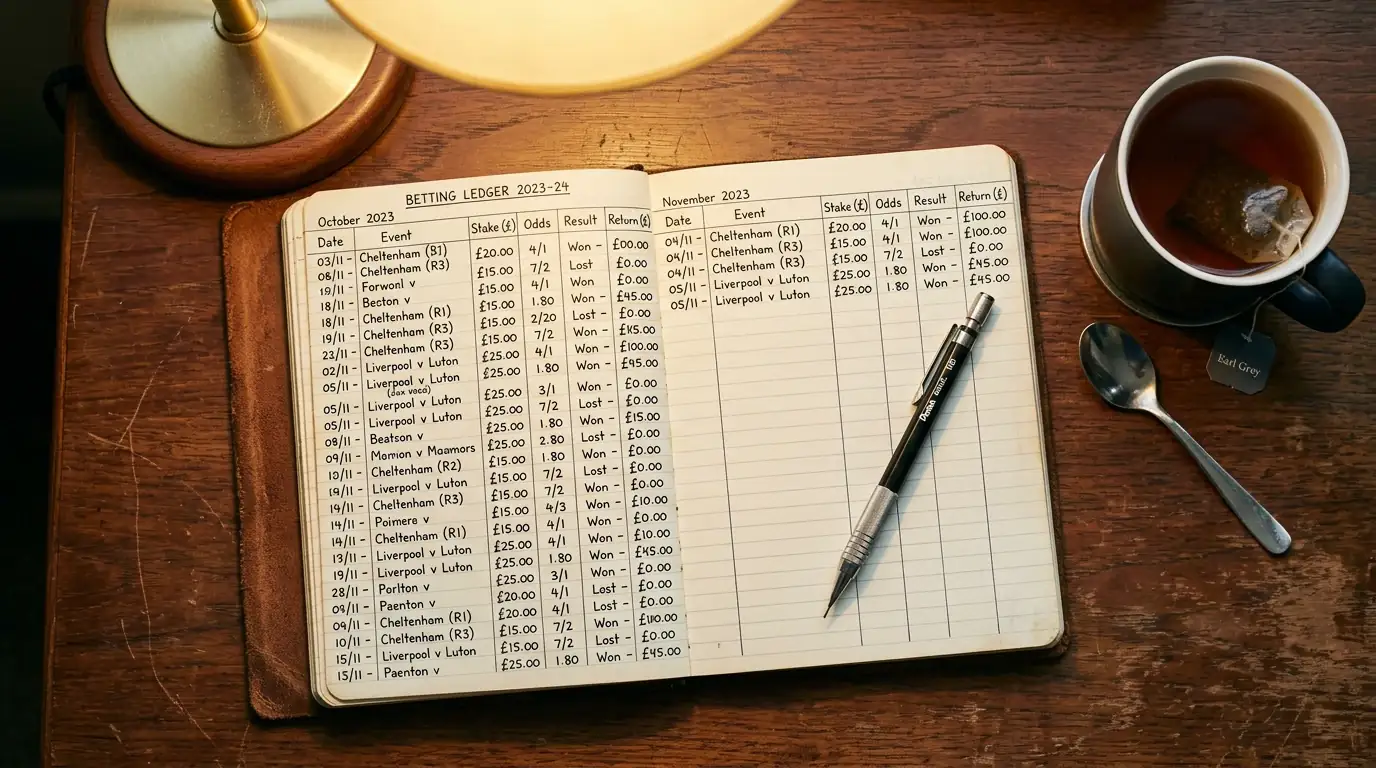
I keep a simple going preference record for every horse I analyse regularly. It is nothing elaborate — just the horse’s name, its finishing positions on each type of ground, and a personal rating of “handles,” “prefers,” or “avoids” for each going category. Over time this database becomes invaluable. When the ground changes late and the market does not fully adjust, that record tells me instantly which horses are helped and which are hindered. For a thorough breakdown of the official going scale, GoingStick readings, and how to use them, the going conditions guide goes much deeper.
Class Drops, Distance Changes and Course Suitability
Class is the vertical axis of UK racing — the measure of how good the competition is. The system runs from Class 7 at the bottom to Class 1 at the top, with Group races (Group 3, Group 2, Group 1) occupying the summit of flat racing and Graded races (Grade 3, Grade 2, Grade 1) doing the same over jumps. A horse dropping from Class 2 to Class 4 is meeting significantly weaker opposition, and that class drop is one of the most reliable positive indicators in form analysis. The reverse — a horse climbing in class — is one of the most reliable red flags.
Distance is the horizontal axis. A horse that has won twice over a mile but is running over a mile and a half for the first time is an unknown quantity at the new trip. Some pedigrees suggest stamina; some running styles suggest speed. But until the horse has actually proven it handles a distance in competition, you are taking a risk the market may not fully price in. I weight proven distance form heavily — a horse with three runs at today’s distance, all finishing within three lengths of the winner, gives me far more confidence than a horse with zero runs at the trip, regardless of breeding.
Course suitability is the overlooked dimension. UK racecourses vary enormously in configuration — Epsom’s camber and downhill run to the finish are unique, Chester’s tight turns favour handy, agile types, Ascot’s stiff uphill finish rewards stamina even in sprint races. A horse with a strong record at today’s course is a legitimate positive factor, and the market sometimes underweights course form because it focuses more on the jockey, trainer, or recent results. I always check whether a horse has run at the course before, and if so, how it performed relative to its runs elsewhere.
The interaction between class, distance, and course creates opportunities. A horse dropping in class, returning to a proven distance, at a track where it has form — that combination is stronger than any single factor on its own. Conversely, a horse rising in class, stretching in distance, and racing at an unfamiliar course is layered with risk. I think of these three factors as a checklist: the more boxes ticked, the stronger the case.
Trainer and Jockey Statistics That Actually Matter
Favourites win roughly 30-35% of UK races overall, but that average masks huge variation by trainer. Some trainers operate at a 40%+ strike rate with their fancied runners; others hover around 15%. The same pattern applies to jockeys. Knowing which trainers and jockeys outperform the market — and in which conditions — is a significant edge.
Richard Wayman, the BHA’s Director of Racing, has noted that the horse population continues to decline and the betting environment remains challenging. That declining population means fewer runners per trainer, which concentrates form data and makes trainer statistics more reliable with smaller sample sizes. A trainer running forty horses a year instead of sixty gives you a tighter, more interpretable dataset.
The metrics I track are straightforward. For trainers: overall strike rate over the last 14 days, course-specific strike rate, and strike rate by race type (handicap vs conditions, flat vs jumps). A 14-day strike rate above 25% is a strong signal that the yard is in form — the horses are well, the gallops are producing results, and the trainer’s targeting is working. For jockeys: win percentage at the course, win percentage when riding for specific trainers (the combination matters more than either individual), and whether the booking represents a change from the horse’s regular rider. A jockey switch to a top rider is usually a positive; a switch away from a top rider to a conditional or apprentice needs scrutiny.
Where most punters go wrong is treating trainer and jockey statistics as standalone selectors. A 35% strike rate trainer does not make every runner a bet — it means a third of the selections win, which also means two-thirds lose. The statistics need to be integrated with the rest of the form picture: a well-handicapped horse, trained by an in-form yard, ridden by a course specialist jockey, on suitable going. No single statistic overrides the whole. For a deeper look at minimum sample sizes, course specialists and winning partnerships, the trainer and jockey statistics guide covers the data in full.
Using Speed Ratings and Time Figures
Raw finishing times are misleading because they depend on the going, the pace of the race, and the wind. A horse that runs a mile in 1 minute 38 seconds on good ground has not necessarily performed better than one that ran 1 minute 42 seconds on soft. Speed ratings solve this by adjusting raw times for conditions, producing a standardised figure that allows comparison across different races, courses, and going descriptions.
Several providers publish speed ratings for UK racing — Racing Post Ratings, Timeform, and Proform among them. Each uses a slightly different methodology, but the principle is the same: a higher rating indicates a faster adjusted performance. I use speed ratings primarily as a cross-check against my form assessment. If the form figures suggest a horse is the class of the field but its speed ratings are mediocre, something does not add up — perhaps the horse has been winning slowly against weak opposition, or perhaps it has been nursed to victory by a tactical ride that flattered its ability.
Speed ratings are most useful in handicaps, where the official rating assigned by the BHA may lag behind the horse’s actual current ability. A horse with a speed figure 5lb above its official mark is effectively running off a lenient handicap — it is faster than the weight it carries suggests. These discrepancies are where value lives, and speed ratings make them visible in a way that form figures alone do not.
One caution: speed ratings are backward-looking. They tell you what a horse has done, not what it will do. A horse that posted a career-best speed figure last time out may not reproduce it — one big run can be an outlier rather than a new baseline. I look for consistency in speed ratings across three or four runs rather than one exceptional figure. A horse that rates 82, 80, 83, 81 is a far more reliable proposition than one that rates 70, 72, 88, 74.
Weight, Handicap Marks and the Official Rating
In a handicap race, every horse carries a weight calculated to give each runner an equal theoretical chance of winning. The BHA handicapper assigns an official rating to every horse that has run three or more times, and that rating determines the weight. Higher-rated horses carry more, lower-rated horses carry less. The handicapper’s goal is a dead-heat finish; the bettor’s goal is to find horses where the rating is wrong.
Prize money in UK racing hit a record 194.7 million pounds in 2025, which means trainers have strong incentives to place horses in races where they are competitively weighted. The deliberate management of a horse’s handicap mark — running it in races where it is not fully wound up, so the rating drops before targeting a big-prize handicap off a lower mark — is a legitimate and common tactic. Spotting these horses requires watching runs closely, not just results. A horse that finished sixth but was never asked for maximum effort by its jockey may have been deliberately underperforming to protect its mark.
Weight changes between races are one of the most informative data points on the racecard. If a horse won its last race and goes up 6lb, that is a standard reassessment. If it goes up 3lb, the handicapper was not overly impressed, which can mean the horse has more in hand than the market thinks. If it goes up 10lb, the handicapper thinks it won easily and the new mark may be harsh. I always look at the weight change relative to the margin of victory and the quality of the race — a narrow win in a strong Class 2 handicap might justify only a small rise, whereas a wide-margin win in a weak Class 5 race might justify a larger one.
The practical takeaway: a horse running off what you judge to be a lenient mark, in a suitable race, on its preferred going, is the raw material of a handicap bet. The official rating is not a verdict — it is an opinion that can be wrong, and when it is wrong in your favour, you have an edge.
Putting It Together: A Pre-Race Form Checklist
After nine years of refining my approach, I now run through the same mental checklist before every bet. It takes about three minutes per horse, and it prevents me from overlooking any single factor that could change my assessment. The checklist is not a scoring system — it is a filter. If a horse fails on any non-negotiable factor, I pass regardless of how strong it looks on other dimensions.
The non-negotiables are going suitability, distance suitability, and fitness. A horse with no form on today’s going is a pass. A horse stepping up or down in distance beyond its proven range is a pass. A horse returning from a layoff of 90+ days without a clear fitness indicator (a recent gallop report, a trainer with a strong fresh record) is a pass. These three factors are binary — the horse either qualifies or it does not.
Once a horse passes the non-negotiables, I evaluate the remaining factors on a scale: recent form trend (improving, stable, or declining), class relative to today’s race (dropping, maintaining, or rising), trainer and jockey form (in-form or cold), speed ratings relative to the field, weight and handicap assessment (lenient or harsh), and course form if applicable. No single factor carries a fixed weight — a strong class drop can override a moderate speed rating, and a jockey booking from a top rider on a neglected horse can compensate for a flat recent form line.
The final step is the price check. Does my assessment of the horse’s chance, based on the form factors above, indicate value at the available odds? If yes, I bet. If the horse looks like a contender but the price is too short, I pass. The form analysis identifies runners; a comprehensive pre-race checklist covers market and discipline checks that sit outside form but are equally important to the final decision. Form tells you what can win. Price tells you what is worth backing.
Frequently Asked Questions
How far back should I look at a horse’s form figures?
For flat racing, the last six runs are usually sufficient, with particular emphasis on the most recent three. For National Hunt, where horses run less frequently, looking back 8-12 runs gives a fuller picture, especially across different going conditions and distances. Form older than two seasons is rarely relevant unless the horse is returning to a specific course or trip where it had notable past performances.
Do speed ratings matter more than official ratings in handicaps?
They serve different purposes. Official ratings determine the weight a horse carries and set the competitive framework. Speed ratings tell you how fast the horse actually ran relative to conditions. When a horse’s speed rating consistently exceeds what its official rating suggests, it is likely well-handicapped — carrying less weight than its ability warrants. Use official ratings to understand the race; use speed ratings to find edge within it.
What trainer statistics should I track for betting purposes?
Focus on 14-day strike rate as a measure of current yard form, course-specific win rate to identify trainers who target particular tracks, and trainer-jockey combination win rate for each significant partnership. A sample size of at least 30 runners is needed before drawing conclusions from any trainer statistic. Smaller samples are unreliable and can mislead.
How do I interpret form when a horse changes distance or class?
Treat both as risk factors rather than deal-breakers. A horse moving up in trip should show stamina indicators — strong finishing speed in its most recent runs, a pedigree that suggests it will stay, or a running style that suggests it has more to give. For class changes, dropping in class is generally positive and rising is generally negative, but a horse that has been competitive in a higher class without winning may be underrated when it drops back to its correct level.
Prepared by the Horse Racing bet Strategy editorial staff.