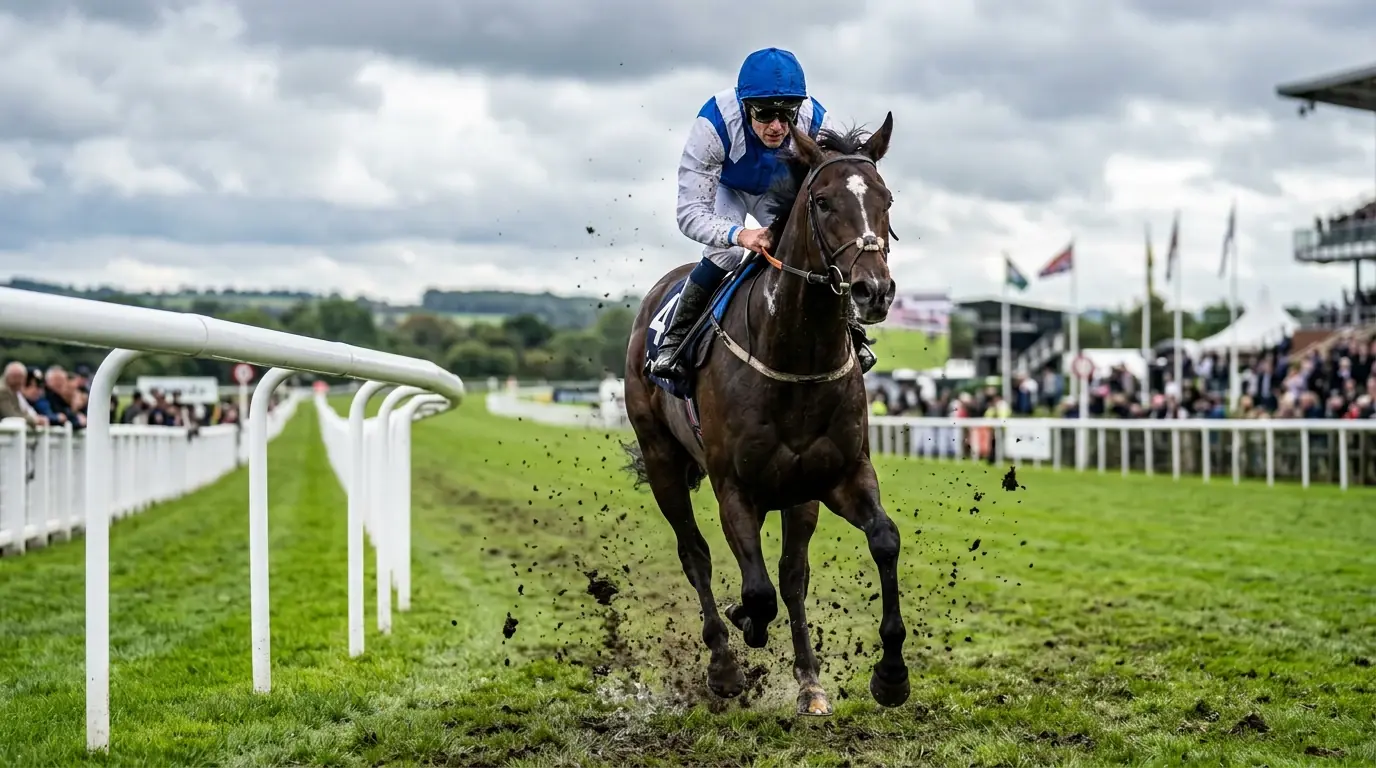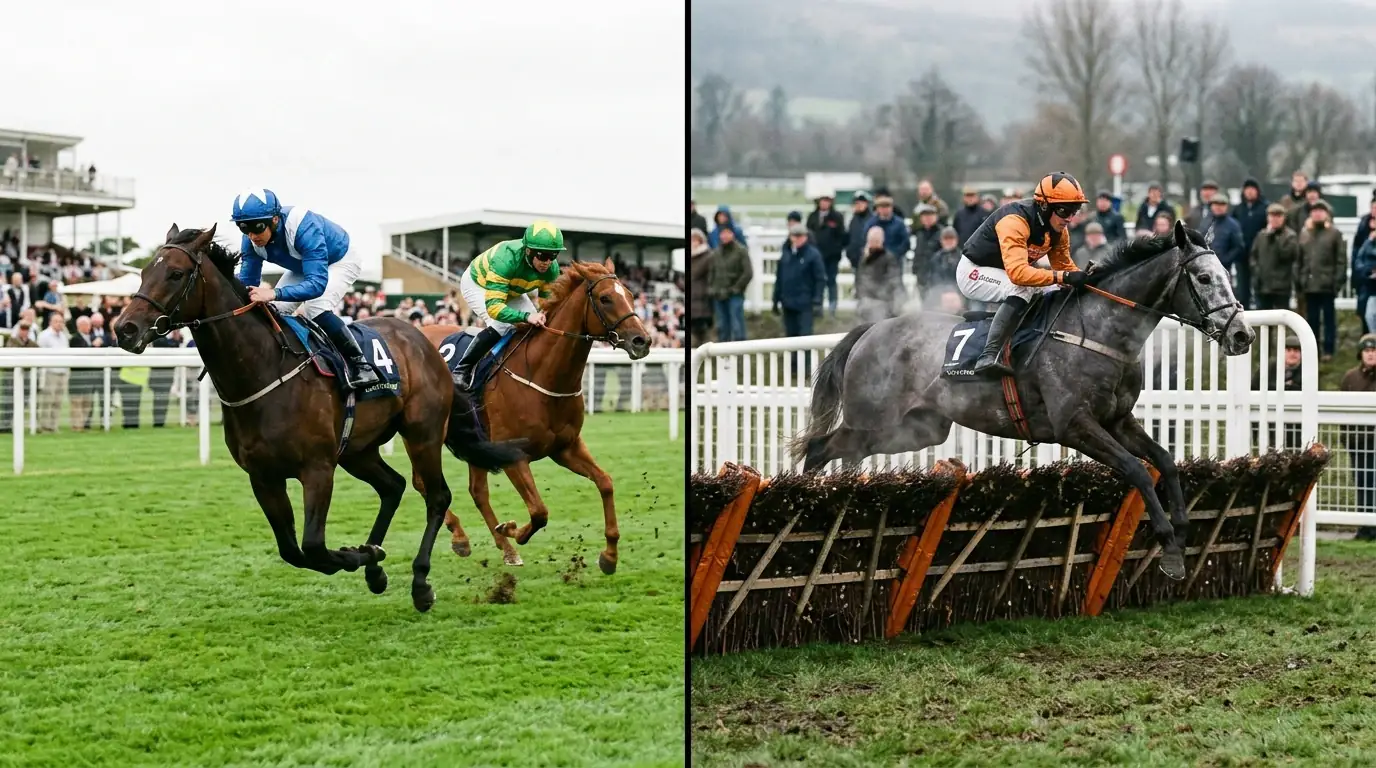
Horse Racing Going Conditions Explained: How Soft, Heavy, Good and Firm Ground Affect Results
 Available in US
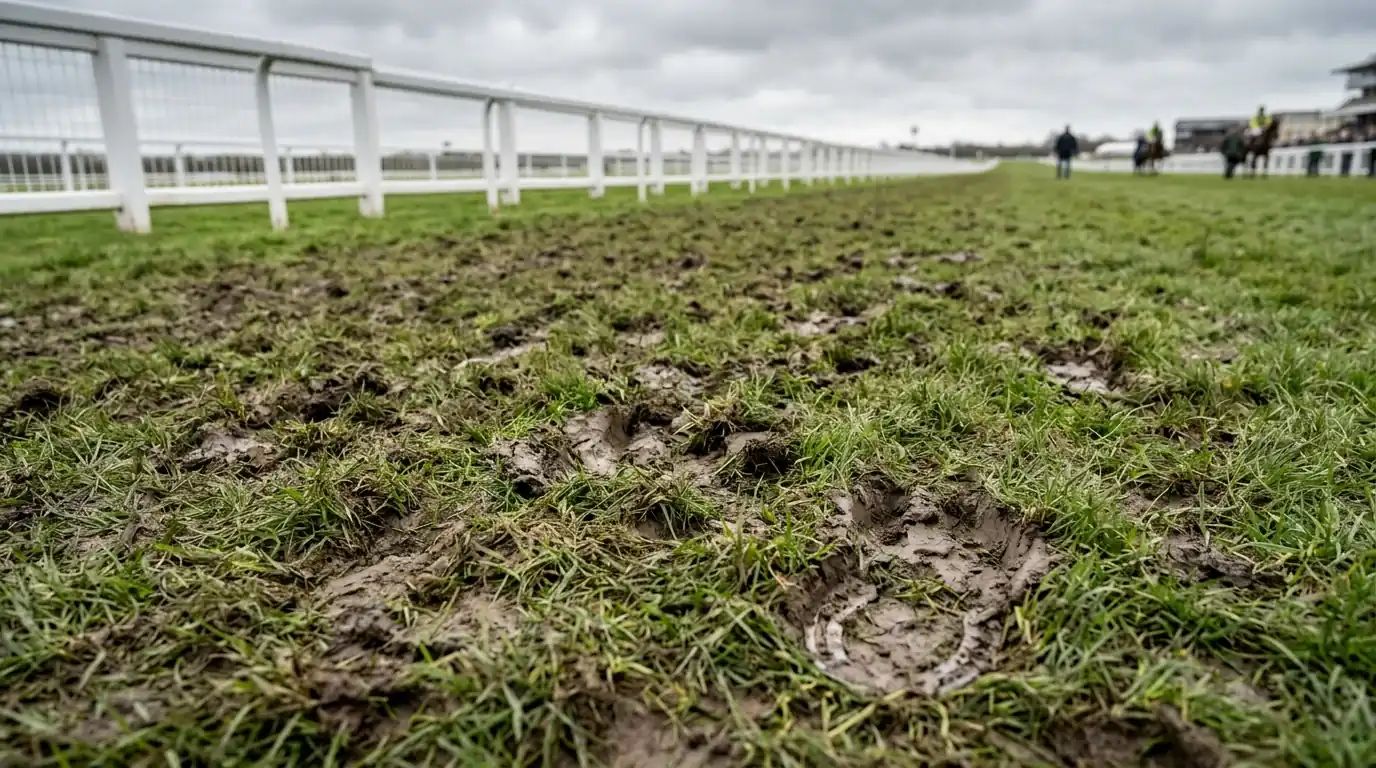
Stand on the rail at Wincanton on a wet February morning and watch the first race. The runners come past the post for the first time and you can hear the difference before you can see it — the sound of hooves striking heavy ground is unmistakable, somewhere between a thud and a squelch. The horses that handle that ground move through it with a particular rhythm; the ones that don’t look like they’re running in treacle. By the second race of the afternoon, you’ll know whose form figures matter and whose are meaningless on the day. Going is the variable that decides which form lines you should trust and which you should ignore.
Going condition is, in my view, the single most under-appreciated factor in casual UK racing analysis. Form figures get all the attention. Going gets a glance at the top of the racecard. Yet the impact of ground type on race outcomes is dramatically larger than most punters factor into their decisions. A horse with three wins on Soft running on Firm is fighting against itself. The same horse on its preferred surface is a different proposition entirely.
This article walks through the official going scale used at UK courses, how the GoingStick measures ground conditions, how horses perform across different going types, and how to adjust your selections when conditions change unexpectedly.
The Official Going Scale: From Hard to Heavy
The UK going scale runs from Hard at one end to Heavy at the other, with multiple intermediate gradations. Each description has a specific meaning, though the boundaries can shift slightly between courses and over time. Reading the going description correctly is the first step in any race analysis.
The scale, from driest to wettest: Hard, Firm, Good to Firm, Good, Good to Soft, Soft, Heavy. National Hunt racing typically operates from the wetter end of the scale during the winter months — Good to Soft, Soft, and Heavy are the dominant descriptions from October through April. Flat turf racing covers the full range, with summer racing often on Good or Good to Firm and autumn racing trending wetter.
Hard ground is rare in modern UK racing. Courses generally water their tracks aggressively in dry conditions to avoid Hard surfaces, both because horses prefer Good ground and because Hard ground increases injury risk. When you see Hard in a going report, it usually means the course has been unable to water sufficiently — typically in extreme drought conditions. Most punters won’t encounter Hard more than a handful of times across a season.
Firm and Good to Firm describe drier surfaces that ride faster than Good. Times tend to be quick on these surfaces, sprinters benefit, and stayers can struggle if the ground bottoms out under them. Horses with a clear preference for firmer ground often have form figures dominated by summer flat racing.
Good is the most common going description across UK flat racing in summer months. It’s the surface most horses handle, the surface horse trainers target for fast times and reliable performance, and the surface course officials usually aim to produce through watering and management. Form on Good ground is the cleanest read of a horse’s underlying ability.
Good to Soft and Soft introduce more variable conditions. The ground rides slower than Good, stamina becomes more important, and form lines from drier surfaces become less reliable. Horses with a wider stride and stronger gallop typically thrive on Soft; horses with quick, light action tend to struggle.
Heavy is the extreme wet end. The ground is deeply cut up, often saturated, and the times are dramatically slow. Stamina dominates. Horses that have run successfully on Heavy have demonstrated they can carry their action through cutting ground — a specific physical and temperamental requirement that not all horses possess. A horse with no Heavy ground form should be approached cautiously when faced with Heavy conditions.
How the GoingStick Measures Ground and What Readings Mean
The GoingStick is a penetrometer-style device used at all British racecourses to provide an objective measurement of ground conditions alongside the traditional descriptive going report. Course officials walk the track on race day, take multiple GoingStick readings at standard locations, and publish the average. The reading provides quantitative reinforcement of the descriptive going.
The scale runs roughly from 4.0 (Heavy) to 14.0 (Firm). Readings around 7.0 typically correspond to Soft ground, 8.5 to Good to Soft, 9.5 to Good, 10.5 to Good to Firm, and 12.0 and above to Firm. The exact mapping between reading and description varies slightly between courses based on local conditions and historical calibration, but the rough framework holds.
What the GoingStick adds beyond the descriptive going is precision. A Soft going can range from a 6.5 reading (just shy of Heavy) to a 7.5 reading (approaching Good to Soft). The difference between those two readings affects which horses can handle the ground. A horse comfortable on standard Soft might struggle on the wetter end of the Soft range; a horse with limited wet ground form might cope with the drier end. Reading the GoingStick figure alongside the going description gives you a more accurate picture than either alone.
The relationship between GoingStick readings and race times is informative. A reading dropping by 1.0 typically corresponds to race times slowing by 1 to 1.5 seconds per mile of distance. So a five-furlong handicap on ground that reads 9.0 in the morning but 8.0 by the afternoon (after rain) would be expected to run roughly 0.7 to 1.0 seconds slower in the afternoon than the morning. These differences may sound small, but they’re enough to redistribute finishing positions significantly in close handicaps.
Course management has improved markedly in recent years. The BHA’s Q1 2025 Racing Report noted 87.6% of races started within two minutes of their scheduled time — up from 79.2% in 2024 and 72.7% in 2023. The same trend in operational efficiency applies to going management. Modern UK courses are better than ever at maintaining consistent ground conditions across a day’s racing, which makes the GoingStick reading more reliable as a predictor of how horses will move through the surface.
How Horses Perform Across Different Going Types
The mistake most casual punters make is assuming all horses adapt to all surfaces. They don’t. Going preference is typically structural — rooted in the horse’s action, conformation, and temperament — and not easily overcome through training. Understanding which horses suit which conditions is the practical core of going analysis.
Horses with naturally long, ground-covering strides often suit softer ground. Their action carries them through the cut without losing momentum. They tend to be related to stamina rather than speed, and their best form usually shows on going descriptions from Good to Soft through Heavy. National Hunt horses, in particular, are bred and selected for this profile because most of the National Hunt season runs on softer surfaces.
Horses with quick, light action — what trainers describe as “needing a fast surface” — perform better on Good or firmer ground. Their stride doesn’t carry them through cut ground efficiently, and they lose their natural rhythm on Soft or worse. Many flat sprinters fall into this category, particularly those with strong sprint form on Good to Firm at major flat meetings.
The going-specific form figures on a horse’s racecard tell you which category they fall into. A horse with three wins on Soft and Heavy but only seconds and thirds on Good is telling you they prefer the wetter end. A horse with five wins on Good and Good to Firm but never finishing in the placings on Soft is telling you the opposite. These patterns hold remarkably consistently across careers.
Favourites’ win rates also shift with going conditions, though the effect is modest. UK favourites win roughly 30 to 35% of races overall. On Heavy ground that figure tends to fall slightly — perhaps to 27 to 30% — because the unpredictability of the surface introduces more upsets. On Good or Good to Firm ground, favourite strike rate edges back toward the upper end of the standard range. The implication for punters: favourites are slightly less reliable on extreme wet going than on standard surfaces, which marginally improves the value of well-fancied second and third favourites in those conditions.
The class-going interaction adds another layer. Lower-class handicaps see more horses running outside their preferred conditions because the available runners are simply less choosy about when they race. Higher-class handicaps and Group races see horses being campaigned more specifically toward conditions that suit them. Form figures in higher-class races more reliably reflect underlying going preference; lower-class form is often diluted by ground that didn’t suit the horse on the day.
Adjusting Your Selections When the Ground Changes
The trickiest moments in UK racing are the days when going changes substantially between the morning report and race time. A morning Good can become an afternoon Good to Soft after a shower. A morning Soft can dry out to Good to Soft if the wind picks up and the sun comes out. Recognising and responding to these shifts is its own skill.
The first habit is checking the going update at least twice during a racing afternoon — once in the morning before placing bets, and again 30 to 60 minutes before each race you’re betting on. Most major bookmakers and the Racing Post update going descriptions through the day as course officials reassess conditions. A shift from Soft to Heavy mid-afternoon transforms the race entirely. Pre-placed bets in the morning may need cancelling or hedging if the rules allow.
The second habit is watching the first one or two races on any day for ground evidence. Times running fast for the conditions, or slow, signal whether the official going description is currently accurate or lagging the reality. Field sizes, finishing margins, and the way horses are moving through the surface all provide live information about what the ground is actually doing. A morning Good going where the first two races run slowly and stamina horses dominate is telling you the surface is riding closer to Good to Soft.
The third habit is recalibrating expectations on the affected horses. A pre-race favourite chosen because the going description matched its preferences may no longer be the bet to make if the ground has shifted away from those preferences. Conversely, a horse you’d dismissed because the going didn’t suit may become viable if the surface has moved toward its preferred conditions during the day.
For deeper context on how form figures integrate with going and other variables, my full guide to horse racing form analysis walks through the systematic racecard reading approach that going analysis is part of.
The Going as Foundation
The going condition is the foundation underneath every other piece of race analysis. Form figures, trainer strike rates, jockey bookings, market moves — all of them exist within the context of the surface horses are running on. A racecard read without going analysis is missing the variable that determines which other variables matter.
The habit that has saved me from more bad bets than any other: checking the going for every selection before confirming the bet. Does my horse have positive form on this surface? Are there negative going indicators on this horse’s record that this surface highlights? Is the going stable enough that my analysis will hold to the off? Three quick questions, every time, before any bet goes on. The cost in time is trivial; the saving in bad bets is substantial.
Going analysis isn’t glamorous. It doesn’t produce dramatic insights or eye-catching predictions. What it does produce is a consistent quality filter that prevents you from backing horses doomed by the surface before the race begins. That filter, applied across hundreds of bets per year, compounds into the difference between bettors who think they understand UK racing and bettors who actually do.
How do going conditions affect race results and favourite win rates?
Going conditions substantially affect which horses can win. Horses with structural preferences for fast or slow ground perform very differently outside their preferred surface. Favourite win rates shift modestly with going — UK favourites win 30 to 35% of races on average, dropping toward 27 to 30% on Heavy ground where unpredictability rises, and edging higher on Good or Good to Firm where conditions suit the broadest range of horses.
What is the GoingStick and how do I use its readings?
The GoingStick is a penetrometer device used at all British racecourses to provide an objective measurement of ground conditions. Readings run from roughly 4.0 (Heavy) to 14.0 (Firm), with intermediate values mapping to specific going descriptions. Use the reading alongside the descriptive going for precision — a Soft going with a 6.5 reading is wetter than a Soft going with a 7.5 reading, and that difference affects which horses can handle the surface.
Prepared by the Horse Racing bet Strategy editorial staff.