Betfair Exchange Horse Racing: How to Back, Lay and Trade UK Racing Markets
 Available in US
Table of Contents
- How Betting Exchanges Work: Back, Lay and the Order Book
- Exchange Commission and Its Impact on Value
- Laying Horses: Profit from Losers
- Trading the Market: Pre-Race and In-Play
- Exchange Odds vs Bookmaker Odds: Where the Value Sits
- Liquidity, Timing and Market Depth
- Building an Exchange-First Betting Approach
- Frequently Asked Questions
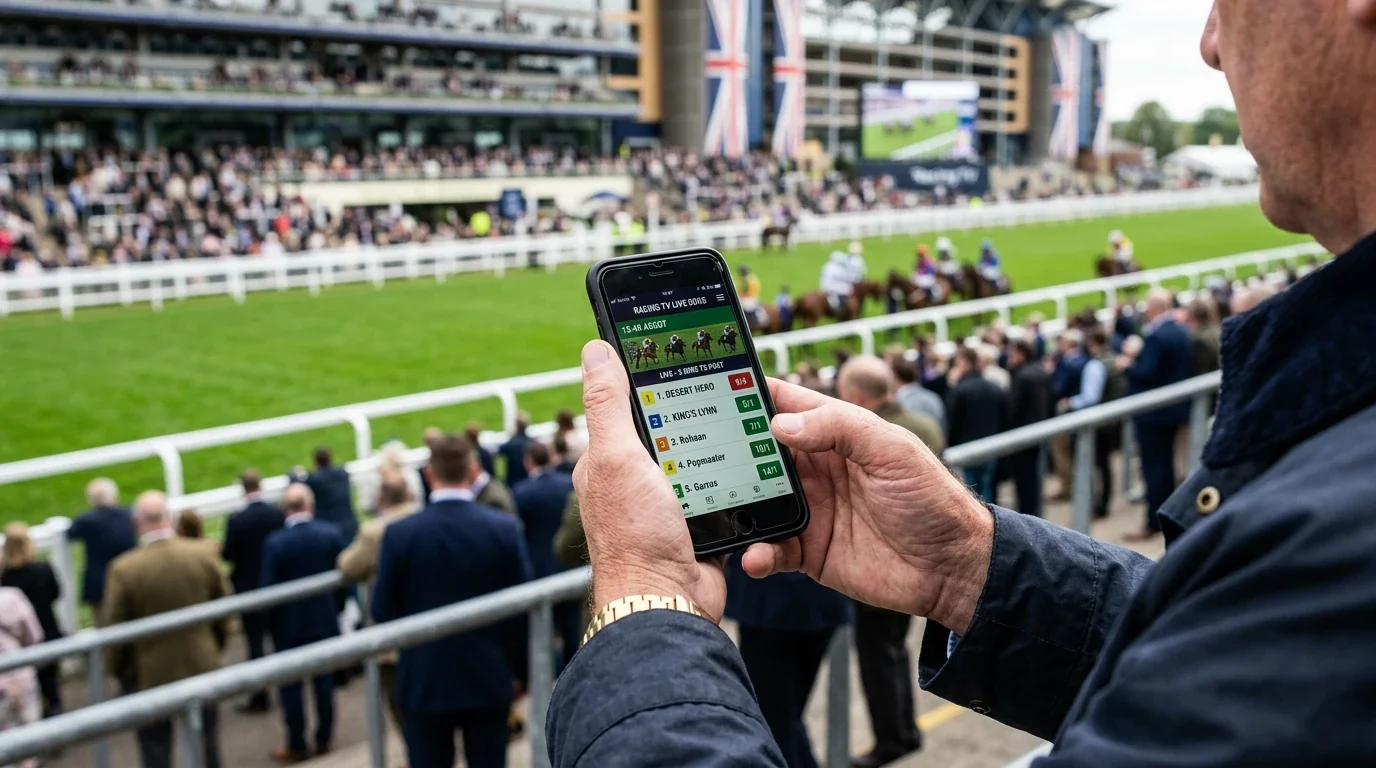
The first time I placed a bet on an exchange, I accidentally laid a horse instead of backing it. I thought I was betting on a 5/1 shot to win the 3:30 at Newbury. Instead, I had offered to pay out 5/1 to anyone who wanted to back it. When the horse won, I owed sixty pounds instead of collecting sixty pounds. That expensive mistake — and the frantic scramble to understand what had happened — was the start of a journey that completely changed how I approach horse racing betting.
Betting exchanges operate on a fundamentally different model from traditional bookmakers. Instead of betting against a company that sets the odds, you bet against other punters in a peer-to-peer marketplace. This changes everything: the odds are typically better, you can bet against horses as well as for them, and you can trade positions before and during a race as if you were buying and selling shares. The exchange takes a small commission on your net winnings rather than building a profit margin into the odds themselves.
Exchange betting attracts around 10 new participants per market roughly every 50 seconds during active trading, creating a liquid, constantly shifting price environment that rewards speed and discipline. The UK exchange market is the most developed in the world, with horse racing as its dominant sport. This guide covers everything from the basic mechanics to advanced trading strategies, lay betting, commission structures, and how to build a profitable approach that combines exchange and bookmaker markets.
How Betting Exchanges Work: Back, Lay and the Order Book
Think of a betting exchange as a stock market for horse racing. Just as a stock exchange matches buyers and sellers of shares, a betting exchange matches backers and layers of horses. Every bet that exists on an exchange has two sides: someone who thinks the horse will win (the backer) and someone who thinks it will not (the layer). The exchange is the platform that brings them together.
The back side works exactly like a traditional bet. You select a horse, choose your stake, and if it wins, you collect the odds multiplied by your stake. The difference is who pays you. At a bookmaker, the company pays. On an exchange, another punter pays — the person who laid the horse to you.
The lay side is where exchanges become interesting. When you lay a horse, you are betting that it will not win. You are essentially acting as the bookmaker for that specific bet. If the horse loses, you keep the backer’s stake. If the horse wins, you pay out at the agreed odds. This means your liability on a lay bet can be significantly larger than the stake you receive — laying a horse at 10/1 for a ten-pound stake means you would owe a hundred pounds if it wins, but you collect ten pounds if it loses.
The order book — sometimes called the ladder or the market depth — displays all the available back and lay prices and the amounts of money waiting to be matched at each price. You will see three back prices (in blue on most platforms) and three lay prices (in pink or red). The best back price is the highest available, and the best lay price is the lowest available. The gap between them is the spread, and on liquid markets it is often just one tick — the exchange equivalent of a penny spread in financial markets.
Unmatched bets sit in the order book until someone takes the other side or until the market closes. If you want a better price than is currently available, you can place an unmatched back or lay at your desired odds and wait. In active markets, especially on feature races, unmatched bets at reasonable prices often get filled within minutes. In quieter markets, they may never match at all.
Exchange Commission and Its Impact on Value
Last year I calculated every penny of commission I paid across twelve months of exchange betting. The total was sobering — not because it was enormous, but because the differences between commission rates across exchanges compounded into hundreds of pounds over the year. Commission is the exchange’s revenue model, and understanding it is essential to calculating your true edge.
Standard exchange commission runs between 2% and 5% on net market winnings. The keyword is “net” — you only pay commission on profit, not on turnover. If you back a horse for ten pounds at 4/1 and it wins, your gross profit is forty pounds and the commission at 5% is two pounds, leaving you with thirty-eight pounds net profit. If it loses, you pay no commission because you made no profit. This is fundamentally fairer than the bookmaker model, where the overround is baked into every price whether you win or lose.
The impact on value is real but modest. At 5% commission, exchange odds of 4.0 (3/1) deliver an effective price of approximately 3.85. At 2% commission, the same odds deliver 3.94. For value betting calculations, you must always use the post-commission effective odds, not the raw exchange price. Failing to account for commission is one of the most common errors I see in punters who switch from bookmakers to exchanges — they compare the headline exchange price against the bookmaker price without deducting commission, and overestimate their edge.
Loyalty programmes and volume discounts can reduce your effective rate significantly. High-volume bettors who turn over substantial sums monthly can see rates drop to 2% or below, though reaching these tiers requires consistent, large-scale activity. For the average punter betting a few hundred pounds per month, the standard rate applies, and it should be factored into every decision about whether to use the exchange or a bookmaker for a specific bet.
Laying Horses: Profit from Losers
How often do you look at a race and think “that favourite is far too short”? With a bookmaker, that opinion is worthless unless you can find something else to back. On an exchange, you can act on it directly by laying the horse — betting that it will not win. Favourites win around 30-35% of UK races, which means they lose 65-70% of the time. If you can identify favourites whose true chance of winning is lower than their price implies, laying them is a direct route to profit.
The psychology of laying is the mirror image of backing. When you back a horse, you want it to run well and beat the others. When you lay a horse, you want it to run badly — or rather, you want any of the other runners to beat it. In a 12-runner race, laying one horse means you have eleven runners working for you. That sounds attractive, and it is, but the risk profile is entirely different from backing: your potential loss on a single bet can be many times larger than your potential profit.
Laying at short prices is lower risk but lower reward. Laying a 2/1 shot for ten pounds means you collect ten pounds if it loses but owe twenty pounds if it wins. Laying at longer prices amplifies both sides. Laying a 10/1 shot for ten pounds means you collect ten pounds if it loses (which it will more often) but owe a hundred pounds if it wins. Disciplined layers tend to concentrate on horses priced between 2/1 and 6/1, where the liability is manageable and the win probability is high enough that mispricing by a few percentage points creates meaningful edge.
Calculating Lay Liability and Risk Management
Lay liability is the maximum amount you could lose if the horse wins. The formula is simple: liability = (lay odds – 1) x stake. At lay odds of 5.0 (4/1) and a ten-pound stake, your liability is (5 – 1) x 10 = forty pounds. That forty pounds must be available in your exchange account at the time the bet is placed — the exchange holds it as collateral until the market settles.
Managing lay liability is where many exchange newcomers come unstuck. They see a horse at 8/1 that they think should be 12/1, lay it for twenty pounds thinking they are risking twenty pounds, and then discover that their actual liability is one hundred and forty pounds when the horse wins. The discipline here is identical to bankroll management for backing: never lay at a level where a single losing bet would significantly damage your bank. I keep my maximum lay liability to no more than 5% of my exchange balance on any single bet, which constrains my lay stakes at longer prices but keeps the account healthy through inevitable losing runs.
Laying multiple horses in the same race is a strategy some punters use to guarantee a loss on only one outcome while profiting from all others. This is essentially constructing a “book” — the same thing bookmakers do. If you lay three horses in a 10-runner race at correct or generous prices, you collect stakes from seven of the ten possible outcomes. The arithmetic works when the combined implied probability of the horses you have laid is less than 100% minus commission, but the margins are thin and the potential for a large loss on the winning horse means this approach demands careful calibration.
Trading the Market: Pre-Race and In-Play
Trading is where the exchange stops being a betting platform and starts being a financial market. The principle is straightforward: back a horse at a higher price, then lay it at a lower price (or vice versa) to lock in a profit regardless of the result. If you back a horse at 6.0 for fifty pounds and later lay it at 4.0 for seventy-five pounds, you have created a position that pays the same amount whether the horse wins or loses. The market has moved in your favour, and you have cashed out that movement.
Pre-race trading happens in the minutes and hours before a race. Prices move as money enters the market, news breaks (jockey changes, going updates, veterinary inspections), and opinions shift. A horse that opens at 8.0 in the morning market might be 5.0 by the off because money has come for it. If you backed at 8.0 and lay at 5.0, your profit is locked in before the horses even leave the stalls. The skill is in reading which way prices will move — and that skill draws on the same form analysis, market reading, and pattern recognition that makes a good punter.
In-play trading — during the race itself — operates at a different speed entirely. Prices swing wildly based on position, pace, and visual impression. A horse that is held up at the rear might trade at 20.0 in-running even if it is travelling well, because the market overweights current position and underweights jockey intent. If you know a trainer’s horses tend to come from behind, backing in-play at inflated prices and then either letting the bet run or laying off as the horse moves through the field can produce outsized returns.
The risk of in-play trading is that it happens in real time with no pause button. Prices can move against you in seconds, connection issues can prevent you from closing a position, and the emotional intensity of watching a race while holding an open trading position makes calm decision-making difficult. I trade in-play only on races where I have a strong view on how the race will develop and only with positions I can afford to let run to the finish if my exit trade does not match. This means smaller stakes and wider stop-losses than I use pre-race. For a step-by-step breakdown of the most popular pre-race approach, including entry timing and the DOBBING variant, the back-to-lay trading guide covers the mechanics in detail.
Exchange Odds vs Bookmaker Odds: Where the Value Sits
The overround tells the story. A typical bookmaker prices a 10-runner handicap at 115-125% total probability — that 15-25% excess is their profit margin, spread across every runner in the field. An exchange market on the same race sits at 101-103%, because the exchange makes money from commission on winnings rather than from inflating every price. That difference translates directly into better odds for backers on virtually every horse in the race.
The advantage is not uniform. Favourites tend to be priced similarly across bookmakers and exchanges because competition for the most visible runners is fierce. The biggest gaps appear in mid-market runners — horses priced between 6/1 and 20/1 — where bookmakers apply the most padding. Third favourites return around 85p in every pound with flat staking at bookmaker prices, and that return improves by several pence when you consistently take exchange odds instead. Over a thousand bets, those pence compound into a meaningful sum.
Bookmakers retain advantages in specific situations. Best Odds Guaranteed — which exchanges do not offer — can make bookmaker prices superior when you take an early price that subsequently drifts. Enhanced place terms on each-way bets are another bookmaker-only feature that can create value the exchange place market does not match. And for punters who bet in small stakes, the fixed-odds simplicity of a bookmaker bet is more practical than managing exchange positions and worrying about unmatched bets.
My approach is to check both markets before every bet and take whichever offers the better effective price after commission. For straightforward back bets, the exchange wins roughly 70% of the time. For each-way bets, especially with enhanced place terms or BOG, bookmakers win more often. The punter who restricts themselves to one channel — exchange only or bookmaker only — leaves money on the table every week.
Liquidity, Timing and Market Depth
Liquidity — the amount of money available to be matched at any given price — is the exchange’s lifeblood, and it varies enormously depending on the race, the time of day, and the meeting. A Group 1 flat race at Royal Ascot on a Saturday afternoon will have hundreds of thousands of pounds in the market. A Tuesday evening seller at Wolverhampton might have a few hundred. This difference determines not just whether your bet gets matched but how efficiently you can enter and exit positions.
Thin markets create problems. In a low-liquidity race, the spread between back and lay prices might be three or four ticks wide, which means you start every position with a built-in disadvantage. Trying to trade in these markets is like trading a penny stock — the price can move against you before you can react, and you may not be able to exit at a reasonable price when you want to. For straightforward backing, thin liquidity matters less, but you should still check that the amount available at the displayed price is sufficient to cover your stake.
Timing your entry matters. The bulk of exchange liquidity arrives in the final 15 minutes before a race, with a surge in the last 5 minutes as late money floods in. If you place a bet an hour before the off, you are betting into a thin market where prices are less reliable and spreads are wider. If you wait until 3-5 minutes before the off, the market is much more efficient. UK racing starts are more punctual than ever — 87.6% of races started within two minutes of scheduled time in the first quarter of 2025, up from 79.2% the previous year and 72.7% the year before that — which makes timing your entry with confidence easier than it used to be. The flip side is that the British horse population is declining, with a projected 6-7% drop between 2024 and 2027 — a trend Richard Wayman, the BHA’s Director of Racing, has described as “the single biggest challenge facing British racing.” Smaller fields in some races mean thinner exchange markets, which pushes liquidity further toward the big meetings and feature races.
Market depth shows how much money is available at each price behind the best price. If the best back price is 5.0 with two hundred pounds available, and the next price is 4.8 with fifty pounds, you know that trying to back more than two hundred pounds will push you onto a significantly worse price. Reading the depth helps you understand how “real” a price is and whether your stake size will move the market against you.
Building an Exchange-First Betting Approach
Switching from bookmaker-only betting to an exchange-first approach is a shift in mindset, not just a change of platform. The top 1% of UK horse racing bettors — roughly 60,000 people — generate 52% of all betting revenue on the sport. A disproportionate number of them use exchanges as their primary tool, because the structural advantages of lower margins, lay capability, and trading flexibility compound over thousands of bets into a significant edge over bookmaker-only punters.
Start by running parallel accounts for a month. Place your normal bets with your bookmaker, but also check the exchange price for every selection and record both prices in your spreadsheet. At the end of the month, calculate what your P&L would have been if you had taken the exchange price every time (after commission). This exercise alone is usually enough to demonstrate the value of making the switch — most punters find the exchange would have delivered 3-5% better returns over the sample.
Prize money in UK horse racing hit a record 194.7 million pounds in 2025, which keeps the sport attractive to owners, trainers, and the public — and by extension, keeps betting volumes healthy. But overall turnover dropped 4.3% in 2025 compared to 2024, and 10.7% compared to 2023. This decline is concentrating liquidity in fewer, bigger markets, making the exchange particularly effective for feature races and major meetings while smaller races become harder to trade. Plan your exchange activity around the racing calendar: the major festivals, Saturday cards, and well-supported midweek meetings are where exchange betting delivers its best value.
The practical toolkit is minimal. You need an exchange account with enough funds to cover both backing stakes and lay liabilities. You need a separate spreadsheet column for commission paid, so your P&L tracking is accurate. And you need the discipline to check both exchange and bookmaker prices before every bet, choosing whichever offers the better effective value. That habit — comparing, calculating, and choosing the best price every time — is the single most profitable behaviour change you can make as a horse racing bettor.
Frequently Asked Questions
What is the difference between backing and laying on a betting exchange?
Backing is betting that a horse will win — the same as a traditional bookmaker bet. Laying is betting that a horse will not win. When you lay, you act as the bookmaker for that bet: you collect the backer’s stake if the horse loses, but you pay out at the agreed odds if it wins. Both sides are matched between individual users on the exchange platform.
Are exchange odds always better than bookmaker odds?
Exchange odds are better than bookmaker odds for straightforward back bets roughly 70% of the time, because the exchange overround is much lower than a bookmaker’s margin. However, bookmakers can offer better value on each-way bets with enhanced place terms and through Best Odds Guaranteed promotions, which exchanges do not provide. Always compare both before placing your bet.
How much money do I need to start exchange betting?
You can start with a modest bankroll, but remember that lay bets require liability collateral in your account. A reasonable starting point is a balance large enough to cover your intended backing stakes plus the maximum lay liability you might hold at any one time. For most recreational bettors, a few hundred pounds provides enough flexibility to back, lay, and trade on one or two races per day.
Is exchange trading the same as gambling?
Exchange trading shares characteristics with both betting and financial trading. Like trading stocks, you can back at one price and lay at another to lock in a profit regardless of the outcome. The skill set — reading market movements, managing positions, and controlling risk — overlaps significantly with financial trading. However, exchange trading on horse races carries the same risk of loss as any form of betting and requires discipline and a proven edge to be profitable long-term.
Created by the ”Horse Racing bet Strategy” editorial team.