Best Odds Guaranteed in Horse Racing: How BOG Works and Why It Matters After the Tax Rise
 Available in US
Best Odds Guaranteed is the single most undervalued promotional concession in British horse racing, and it’s about to become considerably more important. The 2026 Remote Gaming Duty rise from 21% to 40% lands on bookmaker margins like a sledgehammer, and the casualties of that hammer blow will include some of the promotions that have made modern UK betting viable for casual punters. BOG isn’t dying yet, but the conditions that produced it are changing faster than most bettors realise.
I’ve kept records of every BOG payout I’ve received over six years of betting. The aggregate uplift across that period is approximately 11% of total winnings — meaning roughly one in nine pounds I’ve collected in winnings came from BOG enhancements rather than the underlying bets themselves. That figure should make any serious UK punter pay attention. BOG isn’t a marketing gimmick. It’s a structural advantage that compounds across a betting career.
This article unpacks how Best Odds Guaranteed actually works in practice, the real value it delivers over a full season, why the Remote Gaming Duty rise threatens it, and the strategic use cases where BOG materially changes bet selection.
How Best Odds Guaranteed Works in Practice
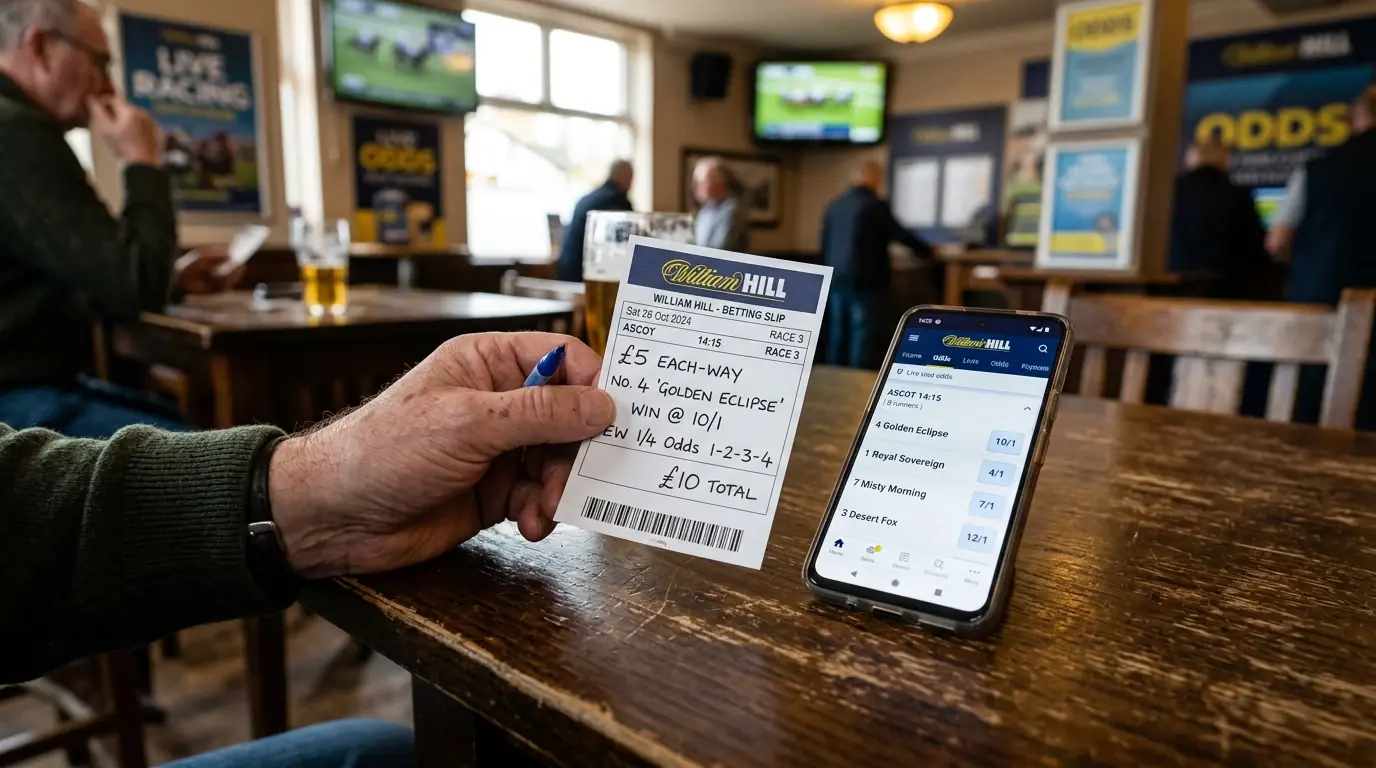
The promise behind BOG is simple. If you back a horse at a fixed price with a bookmaker offering BOG, and the starting price (SP) at the off is higher than the price you took, the bookmaker pays out at the SP rather than your fixed price. You get the bigger of the two prices, with no extra effort required.
An example makes the mechanic clearer. You back a horse at 6/1 in the morning. By post time the horse has drifted in the market and starts at 8/1. The horse wins. Without BOG, you collect at your fixed 6/1 price. With BOG, you collect at the longer 8/1 SP. On a £20 bet, that’s the difference between £140 and £180 — an extra £40 in your account simply because BOG was applied.
The rules vary slightly between bookmakers but the basics are consistent. BOG typically applies only to UK and Irish horse racing, only to single bets (not multiples or system bets at most operators), and only to bets placed on the day of the race. Some bookmakers extend BOG to bets placed the night before, others restrict it to morning-only. Some apply BOG to each-way bets separately on the win and place portions; others only on the win portion. Reading the terms before relying on BOG is essential, but the core promise — get the bigger price between your fixed price and SP — applies almost universally.
What BOG does not do: it doesn’t apply if your horse comes into a shorter price than you took. If you back a horse at 6/1 and it starts at 4/1, you keep your 6/1 fixed price. That’s the standard fixed-odds bet outcome. BOG only ever moves the price in your favour. The downside protection is one-way, which is exactly what makes it valuable.
The catch is that BOG only matters on horses that drift in the market. Horses that shorten don’t benefit. The strategic implication is that BOG creates a built-in advantage for backing horses likely to drift — fancied early-morning runners that move out as the public chases shorter prices on the day’s bigger picks. Understanding which horses tend to drift is itself a meta-strategy that the BOG promotion enables.
Measuring the Real Value of BOG Over a Season
The aggregate impact of BOG over a betting season is larger than most punters appreciate, because the impact is asymmetric — it only ever adds value, never reduces it. The maths is worth examining in detail.
Take a punter placing 500 bets across a year at an average price of 5/1. Assume the market is roughly efficient and 40% of those bets drift between the time of placement and the off (a typical fraction in UK racing). Of those 200 drifters, an average drift of 1 to 1.5 price points adds roughly 25 to 35% to the effective price of winning bets in that group. With a 25% strike rate overall, the winners are split roughly evenly between drifters and non-drifters — so about 25 winning bets benefit from BOG out of 125 total winners.
The numerical impact at a 7% bet-uplift on the affected winners adds approximately 4.5 to 5% to total returns across the season. On level stakes of £10 per bet (total turnover £5,000), that’s a £225 to £250 boost in profit purely from BOG. Across a properly-tracked betting career, BOG can be the difference between marginally profitable and meaningfully profitable. It can also be the difference between marginally unprofitable and break-even.
The pattern across my own records is clearer at the longer-priced end of the book. Horses at 10/1 or longer drift more often than favourites — the public migrates towards shorter prices through the day, leaving outsiders to drift in the wash. BOG uplifts on long-priced winners can be substantial: a horse backed at 14/1 that starts at 22/1 delivers an enormous percentage uplift on the bet. The trade-off is that long-priced winners are rarer, so the absolute frequency of large BOG payouts is moderate.
Tracking your own BOG impact is straightforward. Record your fixed-odds price and the SP for every winning bet. Calculate the difference. Sum across the year. The figure you produce is the empirical value of BOG to your specific betting style. For most disciplined punters, it ranges from 3% to 8% of total winnings — material money that disappears the moment BOG disappears.
How the Remote Gaming Duty Rise Threatens BOG Offers
The Autumn 2025 announcement that Remote Gaming Duty would rise from 21% to 40% with effect from 1 April 2026 lands directly on bookmaker margins, and the consequences cascade through the entire promotional ecosystem. Industry modelling suggests the harmonised rate change will cost the British racing industry around £66 million per year and potentially 2,752 jobs. Those numbers reflect the scale of the margin compression bookmakers face — and the scale of the corresponding pressure to cut costs elsewhere.
BOG is one of the most expensive promotional concessions bookmakers offer because it’s open-ended. Every drifting price represents an immediate financial cost to the operator that wasn’t there before BOG existed. Across a busy UK racing weekend with thousands of bets, the cumulative BOG payout is substantial. When margins were generous, that cost was absorbable. With margins now compressed by a doubling of the relevant tax rate, the cost-benefit calculation changes.
The likely outcomes vary. Some bookmakers will restrict BOG to certain races or certain bet types — perhaps only Class 2 races and above, or only bets placed within an hour of the off. Some will introduce price caps — BOG only applies up to, say, a 50% price improvement. Some will retain BOG as a customer acquisition tool for new accounts but withdraw it from established accounts. A few may withdraw it entirely.
The wider context makes this trajectory clearer. UK online horse racing betting turnover has already fallen by £1.6 billion over two years, or about £3 billion adjusted for inflation. The legal market is contracting while the illegal market grows — unique visits to unlicensed horse racing betting sites grew by 522% over four years from 2021 to 2024. Grainne Hurst, CEO of the Betting and Gaming Council, has been blunt about the structural problem: “These parasite operators don’t pay tax, don’t care about safer gambling, and do not contribute a penny to the levy.” Legal bookmakers shouldering rising tax while losing market share to unlicensed competitors are unlikely to maintain promotional generosity at historical levels.
The practical implication for punters is timing. BOG offers in the form punters have known them since the 2010s are likely to be reduced or restricted within the first two years of the new tax environment. Locking in the BOG advantage on bets placed before any restrictions kick in is rational. Building betting strategies around the assumption that BOG will always be available at current generosity is naive.
Strategic Use of BOG: Early Prices and Morning Steamers
BOG rewards a specific betting style: taking fixed prices early in the day and letting the market reveal the eventual SP. Punters who place all their bets in the morning, particularly on horses that will drift through the day, extract maximum value from BOG. Punters who wait until the off to place bets — when prices have stabilised closer to the SP — extract nothing from BOG.
The morning-steaming pattern is the textbook BOG opportunity. A horse priced at 4/1 in the early morning, shortening to 7/2 by midday, then 3/1 by post time, doesn’t trigger BOG — the punter who backed at 4/1 keeps their 4/1 price because it’s the better number. But the early 4/1 was already a strong fixed price, and the trajectory toward 3/1 confirms the underlying value the early backer identified.
The drift pattern works the opposite way. A horse priced at 6/1 in the early morning, drifting to 8/1 by post time, gives BOG-equipped backers the longer 8/1 price. The early backer captured a price that turned out to underestimate the eventual market read, but BOG corrects that miscalculation in the punter’s favour.
The strategic implication: BOG argues for placing bets early, when prices are still forming, rather than waiting for market clarity. The conventional wisdom that “the morning market is too volatile to trust” is wrong when BOG is in play. The morning is the optimal time to bet precisely because BOG converts price uncertainty into one-way upside.
The corollary discipline is that BOG should never tempt you into bets you wouldn’t otherwise place. A horse you wouldn’t back at 5/1 isn’t a better bet at 6/1 with BOG just because the BOG uplift might add another 50p per pound. The underlying judgement on whether the bet has value comes first. BOG amplifies good bets; it doesn’t transform bad bets into good ones.
For deeper context on the implied probability calculations that determine whether any given price represents value, my guide to horse racing odds explained walks through the conversion between fractional, decimal and implied probability that underpins all price-based bet decisions.
Adapting to the Changing Environment
The next two years are likely to see significant adjustments in how UK bookmakers structure BOG and similar promotions. Punters who treat the current environment as permanent will be slow to adapt; punters who recognise the trajectory will adjust strategy in time.
The practical adjustments I’m making for the 2026 calendar: tracking BOG payouts more closely to identify which bookmakers maintain the most generous terms; placing morning bets across multiple BOG-offering accounts rather than concentrating with one; favouring fixed-odds bookmakers over exchanges for the bet types where BOG materially adds value (single-race win and each-way bets, primarily); and reducing reliance on BOG for the marginal-value bets where the BOG uplift was doing most of the work to make the bet worthwhile.
The 2026 racing calendar will remain bettable, profitable, and competitive. But the promotional environment that has supported casual and disciplined punters alike since the late 2010s is being compressed by tax policy in ways that change the maths. BOG remains valuable — for now. Using it well, while it’s still as generous as it currently is, is the rational strategy for the next 18 months. After that, the landscape will look different, and adjusting to that new landscape will be the next skill to develop.
Will bookmakers scrap Best Odds Guaranteed after the 2026 tax increase?
Outright withdrawal is unlikely in the near term, but restrictions are highly probable. Industry analysis of the Remote Gaming Duty rise from 21% to 40% suggests the change will cost the racing industry around £66 million annually and pressure bookmaker margins materially. Expect BOG to be progressively narrowed — limited to certain race classes, capped at maximum price improvements, or restricted to specific account types — rather than eliminated entirely.
Does BOG apply to ante-post and each-way bets?
BOG generally applies only to bets placed on the day of the race, so ante-post bets placed weeks or months ahead aren’t covered. For each-way bets, most bookmakers apply BOG to the win portion only, though some extend it to both win and place. Reading the specific terms for your bookmaker before relying on BOG for any non-standard bet type is essential.
Written by the editors at Horse Racing bet Strategy.