Back-to-Lay Horse Racing Trading: How to Lock In Profit Before the Off
 Available in US
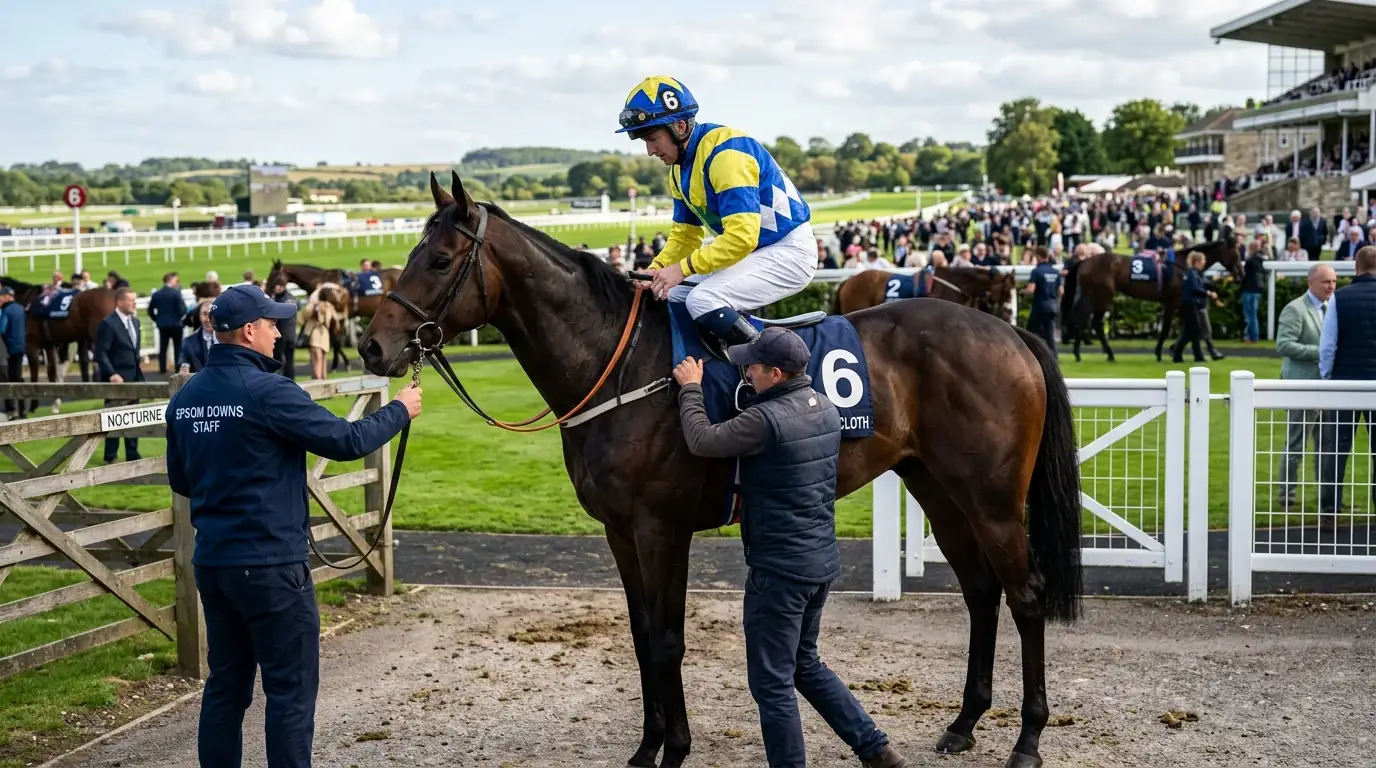
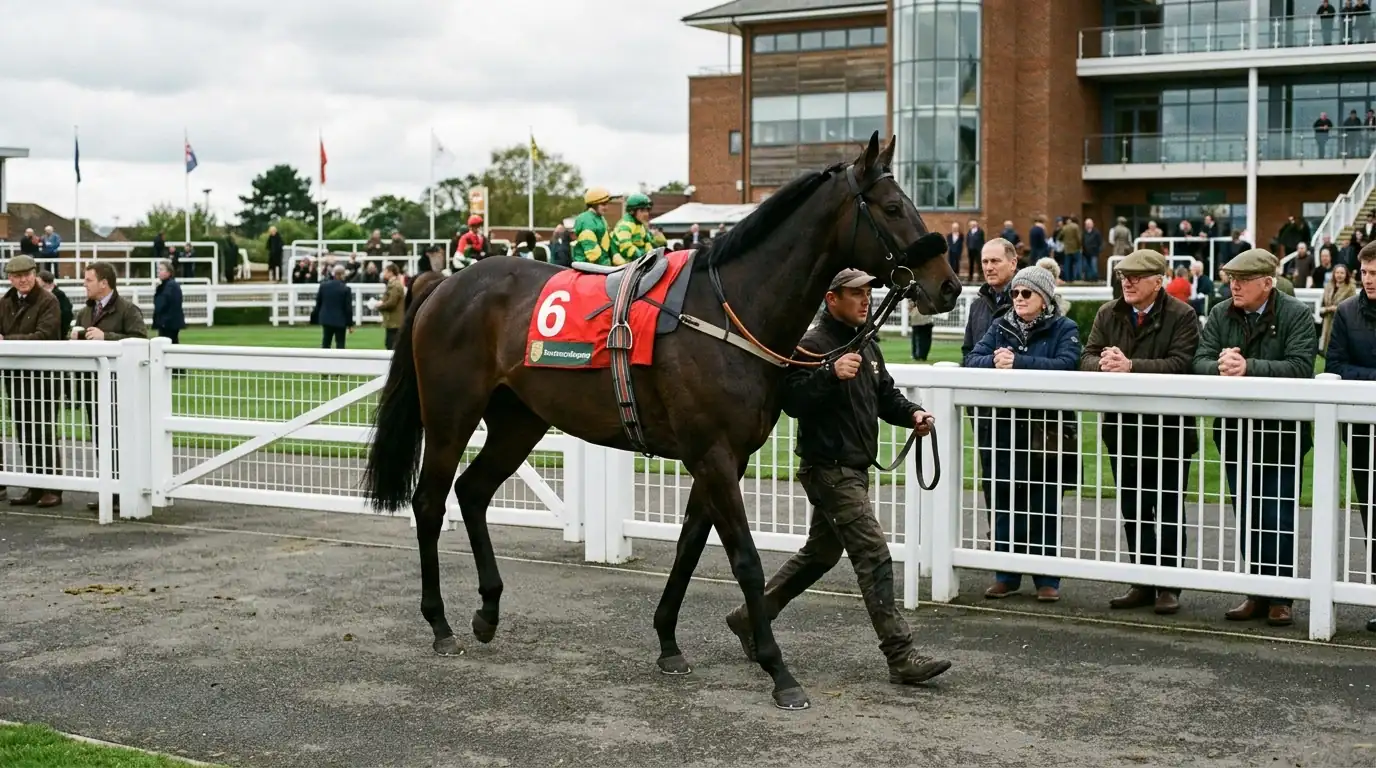
The first back-to-lay trade I ever closed felt like cheating. I’d backed a five-year-old novice chaser at 8.0 on the Betfair Exchange thirty minutes before the off. The horse showed well in the parade ring, the price came down to 4.5 by the time the runners reached the start, and I closed the trade for a guaranteed profit before a single hoof had hit the turf. I still remember thinking: people are doing this for a living?
Back-to-lay trading isn’t betting in the traditional sense. You’re not predicting who’ll win — you’re predicting which way the market will move. Get it right and you bank profit regardless of what happens once the race starts. Get it wrong and you can either accept the loss or hold the back bet and run it as a normal punt. Either way, the framework is fundamentally different from picking winners.
This article walks you through how back-to-lay actually works step by step, when to enter for maximum price drift, how to green up to lock in profit, and the more aggressive DOBBING variant that experienced traders use to multiply returns.
How Back-to-Lay Trading Works Step by Step
The mechanics rest on a single principle: prices move before races run. The horse you back at 10.0 in the morning often trades at 6.0 by post time, especially if the public catches onto a fancied runner. If you can identify horses likely to shorten, you can back at the longer price and lay back at the shorter price, banking the difference.
Walk through a sample trade. You back a horse for £20 at 8.0 (decimal) at 11am. The potential profit if it wins straight is £140. Three hours later, the price has dropped to 5.0. Now you lay £32 of the same horse at 5.0. If the horse loses, you lose your original £20 back stake but win £32 from the lay — net profit £12, regardless. If the horse wins, you win £140 from the back but pay out liability of £128 on the lay (5.0 minus 1 times £32) — net profit £12. Either outcome, you’re £12 ahead. That’s the magic of trading: you’ve eliminated the result risk.
The exchange enables this because every bet matched is essentially a transaction with another user, not with the house. When you back at 8.0, someone is laying at 8.0 against you. When you lay at 5.0, someone is backing at 5.0 against you. The exchange takes commission on net winnings — typically 2 to 5% depending on your account status. That commission is the only meaningful cost in a trade, and it should always be factored into your profit projection before you take the position.
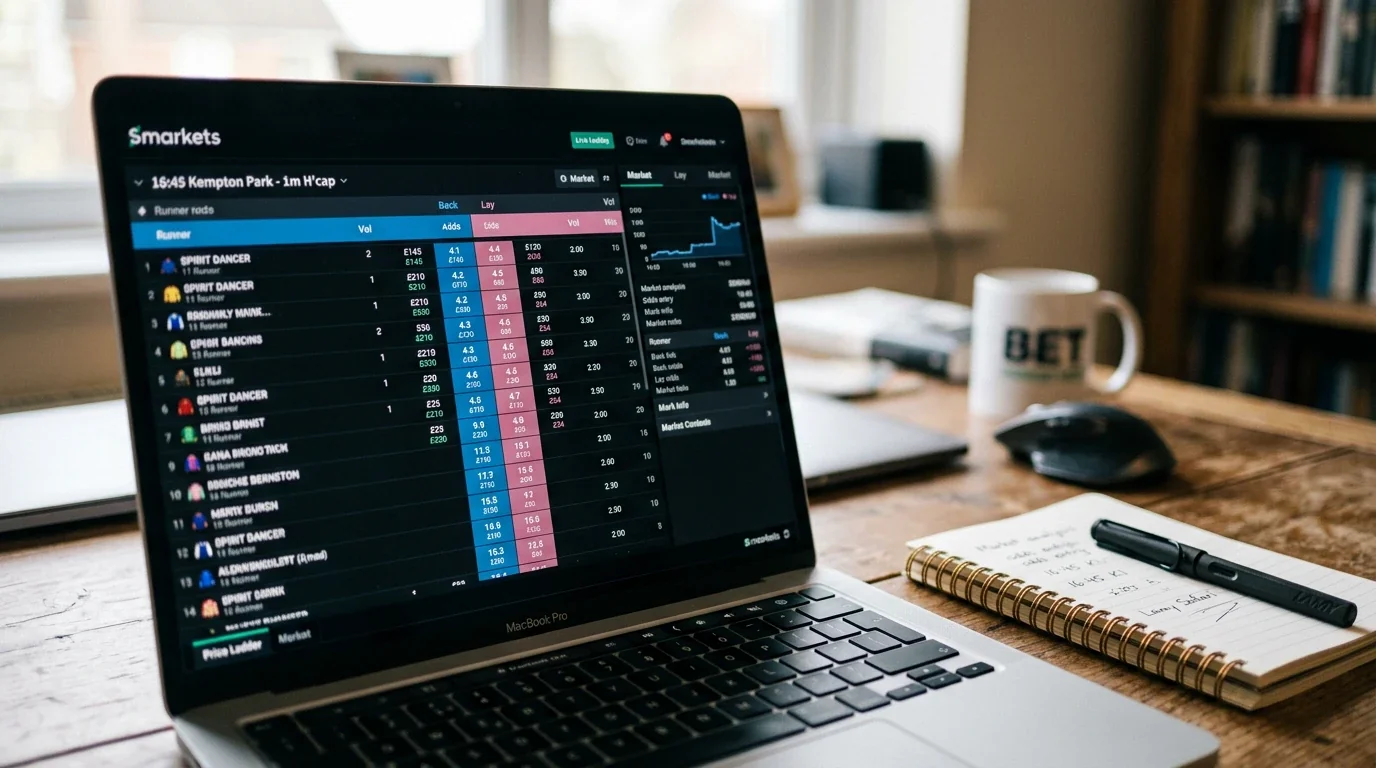
The platform itself is busy in a way that statistics make clearer. Exchange markets show new bets matching every 50 seconds on average in the run-up to a UK race, with around ten participants involved in the most liquid markets. That activity is your friend — it means there’s almost always volume on both sides of the book ready to match your trade.
The size of your trade matters. If the market has £500 available to lay at 5.0 and you try to lay £600, only £500 will match and the remainder will sit waiting. In races with thin liquidity, large trades can move the price against you. The general guidance for newcomers: never trade more than 10% of the available volume at your target price.
When to Enter: Timing Your Back Bet for Maximum Drift
The single biggest variable in back-to-lay profitability is when you enter the market. Get the timing right and the work of finding the trade is already done. Get it wrong and you’re fighting the natural flow of money.
For pre-race trading on UK racing, my entry window is typically the morning of the race, usually between 9am and 11am, when the exchange has thinner volume and prices haven’t yet been refined by the day’s money. Horses that will eventually shorten significantly often trade at their longest prices during this window because the market hasn’t fully formed. The trade-off is that thinner volume means slightly wider spreads — you might back at 8.4 instead of 8.0 — but the eventual movement is usually larger, more than compensating.
The catalysts you’re looking for vary. Some are obvious: a hot favourite from a top yard returning from a break, where you anticipate steady backing money throughout the day. Others are more nuanced: a horse from a stable currently in good form, running on suitable going, that the wider public hasn’t yet rated. A clever Stable Tour quote, a positive Racing Post comment, or a respected tipster naming a selection can all trigger movement that didn’t exist at 9am.
The window from 30 minutes before the off through to the start of the race is where most of the volume hits. Prices move sharply in this window — both ways. A horse drifting in the morning that suddenly comes in by post time wouldn’t have been profitable for an early-bird back-to-lay strategy. A horse that gets steady late money is exactly what you want.
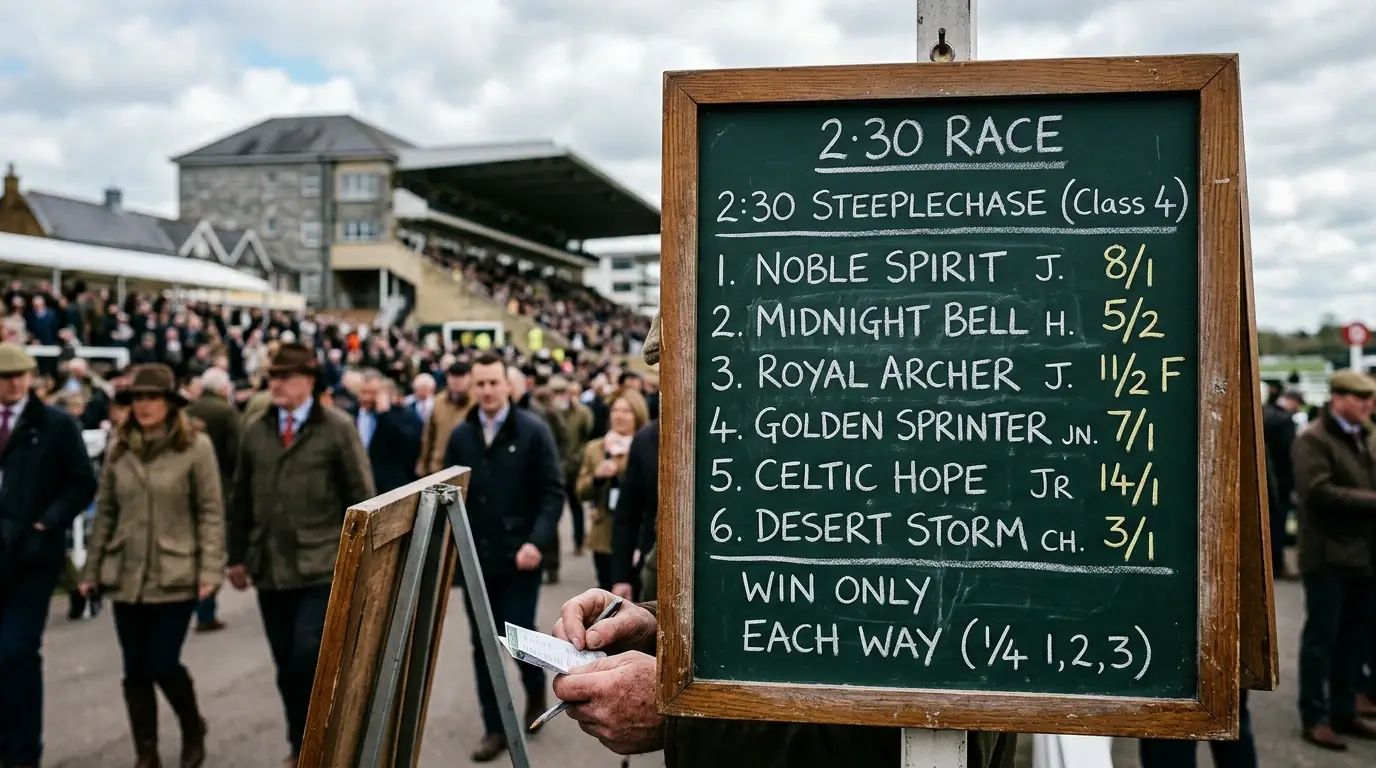
One pattern that has consistently produced profit for me: well-fancied horses in big-field handicaps tend to drift in the morning (because public money flows to outsiders first) and then come in sharply in the final 30 minutes as sharper money arrives. Backing the morning’s 8/1 and laying at 6/1 by post time is a textbook back-to-lay setup that recurs week after week in UK handicap markets.
What you want to avoid is entering against a clear trend. If a horse is already steaming in the market when you arrive — say, trading at 4.5 having opened at 7.0 — chasing it for further drift contraction is dangerous. Most of the move has happened, and a small reversal can leave you sitting on a losing back bet you didn’t anticipate.
Greening Up: Locking In Profit or Cutting Losses
Greening up is exchange slang for the moment you place your closing lay (or back, if you’re trading the other direction) at a stake that produces equal profit across all outcomes. The name comes from the Betfair interface: when your position is balanced across every runner, the P&L column shows green numbers regardless of winner.
The maths is the inverse-stake calculation. If you backed £20 at 8.0 and want to lock in profit at 5.0, the closing lay stake is your back stake multiplied by your entry price divided by your exit price: £20 × (8.0 ÷ 5.0) = £32. Lay £32 at 5.0 and you’re green. Most exchange platforms have a one-click “green up” button that calculates this automatically.
The harder skill is knowing when to green up versus when to let the trade run. If your horse has come into 5.0 but you genuinely believe it will continue shortening to 4.0 or shorter, greening up at 5.0 locks in less profit than waiting might deliver. But the moment you decide to wait, you’re no longer trading — you’re punting. The decision to hold an open position should be made with full awareness that you’re now exposed to the result.
My personal rule: green up at the first price target if I’m satisfied with the profit, even if the move continues. Greed costs traders more than ignorance. The alternative — a partial green-up, where you lock in some profit and let some of the position run — works for experienced traders but adds complexity that new traders should avoid.
Cutting losses works the same way in reverse. If your back at 8.0 starts drifting to 9.0 and your read of the market has changed, lay back at 9.0 to limit the loss. You’d back £20 at 8.0 (potential £140 profit if win) and then lay £18 at 9.0 (liability £144 if win). Net result: a small loss regardless of outcome, but you’re out of the position and able to look at the next race. Traders who let losing trades run because they can’t accept the small loss are the traders who eventually take big losses.
DOBBING: The Double-or-Bust Variant
DOBBING — Double or Bust — is back-to-lay trading taken to its logical extreme. Instead of greening up at a small profit, you set a lay order at exactly double your back price and wait for the market to either hit it or not. Either you double your back stake as profit, or you take the full loss of the back bet.
The setup is simple. Back a horse at 8.0. Set a lay order at 4.0 for a stake equal to your back stake. If the horse comes into 4.0 in running or pre-race, your lay matches automatically — you’ve doubled your money. If the horse never reaches 4.0, your lay never matches, and you lose the original back stake when the horse loses the race.
The maths is brutal in its honesty. To break even on DOBBING you need slightly better than a 50% hit rate on your selections reaching the halved price. In practice, the strategy works on horses you genuinely think will lead or be prominent in the race — runners that shorten dramatically in running if they hit the front. Backing a horse at 8.0 and dobbing at 4.0 requires the horse to either trade at 4.0 pre-race (rare for a horse opening at 8.0) or to lead clearly in running before the result is decided.
National Hunt racing produces more DOBBING opportunities than flat because the longer race distances mean more time for prices to swing dramatically in running. A horse leading clearly with a circuit to go often trades through halved prices long before the race is decided. Flat races over five furlongs are over too quickly for most DOB strategies to work — the price either doesn’t shorten enough in time, or you don’t get the chance to lay before the result is in.
For practical exchange mechanics including liquidity and commission considerations, the full picture is in my guide to Betfair Exchange horse racing, which covers backing, laying and BSP usage in more depth.
Building Discipline Around the Trade
Trading magnifies emotional swings in ways that straight betting doesn’t. A back-to-lay setup that’s working will tempt you to add to the position. A trade going against you will tempt you to “save” it by adding hedge bets that complicate the maths.
The single most useful habit I’ve developed is writing down — before I place the back bet — the exact price at which I will lay (the target), the exact price at which I will cut (the stop), and how much I’m willing to lose if I get it wrong. Once those numbers are set, the trade runs itself. I don’t watch the price tick by tick. I check it at planned intervals, take the action my plan dictates, and move on.
The traders who lose money long-term aren’t bad at predicting prices. They’re bad at sticking to their plan when adrenaline arrives. A 20% hit rate on a system with proper stops will beat a 60% hit rate on a system without stops every single time.
Back-to-lay trading is a legitimate strategy that requires technical setup, patience, and ruthless discipline. It isn’t a path to easy money — exchange markets are competitive, and edges are small. But it’s also one of the few approaches in UK racing where you don’t need to pick winners to win. That’s worth a lot.
What minimum odds should I target for a back-to-lay trade?
Most consistent back-to-lay setups work with entry prices between 5.0 and 15.0 decimal. Below 5.0 the available price movement is usually too small to justify the trade after commission. Above 15.0 the horses are usually too speculative for predictable drift patterns. Big-field UK handicaps with horses opening at 8.0 to 12.0 are the natural hunting ground.
What is DOBBING and how does it differ from standard back-to-lay?
DOBBING — Double or Bust — sets the closing lay order at exactly half the back price, doubling your back stake as profit if it matches and losing the back stake if it doesn’t. It’s higher-variance than greening up at small profit margins, and it works best on horses likely to lead or be prominent in running, where dramatic in-race price movements create matching opportunities.
Prepared by the Horse Racing bet Strategy editorial staff.