The Pre-Race Checklist: 12 Factors to Verify Before Placing Any Horse Racing Bet
 Available in US
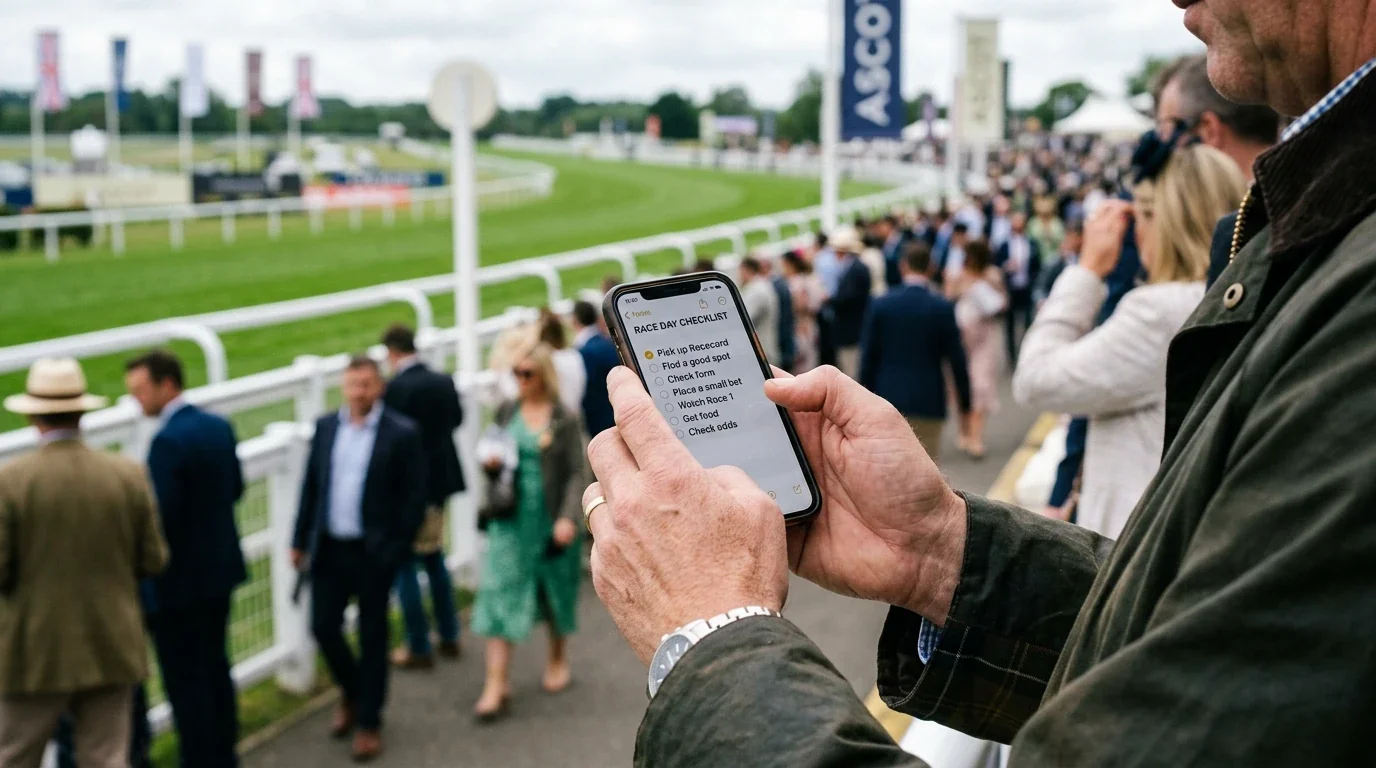
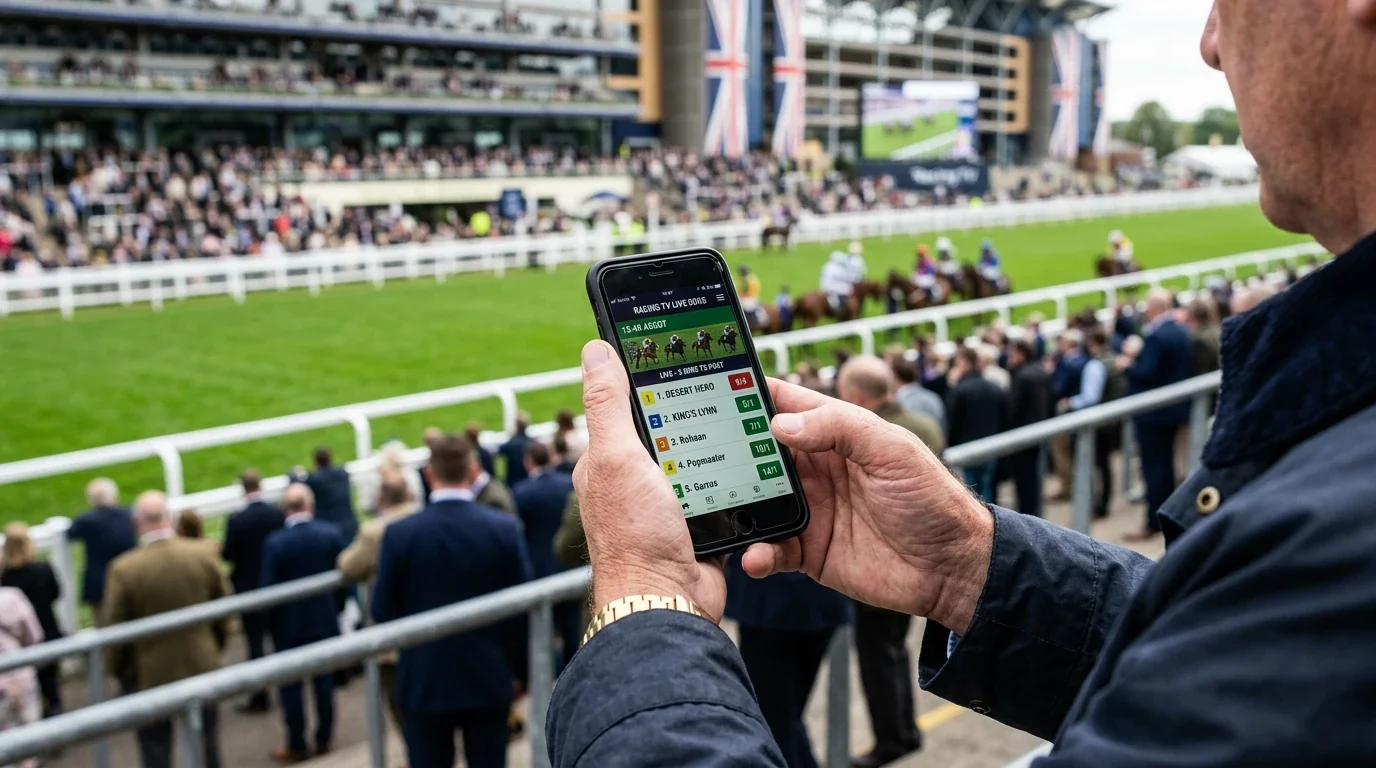
Five years ago I made a habit I now consider non-negotiable. Before any bet on UK racing, I run through a written checklist on my phone. Twelve items, four categories, takes about three minutes per race. It looks fussy to anyone watching me at the track, and I don’t care, because the discipline saves me from the impulse bets that used to leak away the profit my form work had earned. The checklist is the dumb gate I put between myself and the bet slip, and it works precisely because it doesn’t trust my judgement in the moment.
The case for a structured pre-race routine is straightforward. The brain works against you when the off is approaching. Time pressure, social cues, the unread Twitter post you saw twenty minutes ago, the price drift you’re trying to catch — all of it conspires to push you towards “just place the bet now” without verifying you’ve done the work. The checklist replaces in-the-moment judgement with a process. The process produces better decisions than the judgement, on average, across hundreds of bets.
This article walks through the four categories I use — form, conditions, market and discipline — with the specific checks under each. Pick the ones that fit your own approach, drop the ones that don’t, and build a routine you’ll actually use rather than admire from a distance.
Form and Fitness Checks
The first three items on the checklist deal with the horse itself. Get these wrong and no amount of clever staking will save the bet.
Check one is recent form. The horse needs to have produced evidence of being competitive in the last three runs, or to have a clear excuse for any below-par performances. Recent form figures of 0-0-0 with no excuses available — bad ground, wrong trip, returning from injury — is a no-bet regardless of how attractive the price looks. UK favourites win 30 to 35% of races overall, with the rate dropping to about 25.7% in handicaps and rising to roughly 33% in novice races, and even favourites disappoint substantially. Horses without recent positive form disappoint at far higher rates.
Check two is fitness from the last run. Days since last run is the simple proxy — anything between 14 and 60 days for flat horses is conventionally optimal, with the range extending to 90 days for jumpers. Longer absences need explanation. A horse running off a long layoff after a campaign-ending injury is a different proposition from one returning from a planned summer break. The trainer’s record with horses returning from breaks is the cleanest indicator. Some yards have horses fit first time out; others need a run or two to find their best form.
Check three is the equipment and tactics line on the racecard. First-time blinkers, first-time tongue tie, first-time hood, change of jockey, change of bit — each of these tells you the connections are trying to address something specific. Equipment changes are recorded in plain sight on the racecard but get ignored by most casual punters. A first-time tongue tie on a horse whose recent runs have been described as breathing-related disappointments is a positive signal the market often underprices.
Course, Going and Draw Checks
The next three items address the environment the horse will be racing in. A genuinely good horse in unsuitable conditions is a losing bet; a moderate horse in conditions perfectly tailored to them can outperform their official rating.
Check four is course form. Some horses simply prefer specific tracks — the undulations, the configuration, the turn profiles. A horse with prior wins at today’s track carries a structural advantage that the market sometimes underweights, particularly when the bare form figures look modest because the prior wins came at lower class levels. The “course winner” tag in the racing press is doing analytical work for you; pay attention to it.
Check five is going. The going (ground condition) preference is one of the most predictive variables in UK racing. A horse with all wins on Soft ground running on Firm is fighting against itself. A horse who’s never won on Heavy facing a Heavy-going card has to be discounted regardless of recent form. The going can shift between mid-morning and the off if rain arrives, so the check needs to happen close enough to the race that the latest going description is current. Most racing apps and the official BHA going stick readings are updated within an hour of the first race each day.
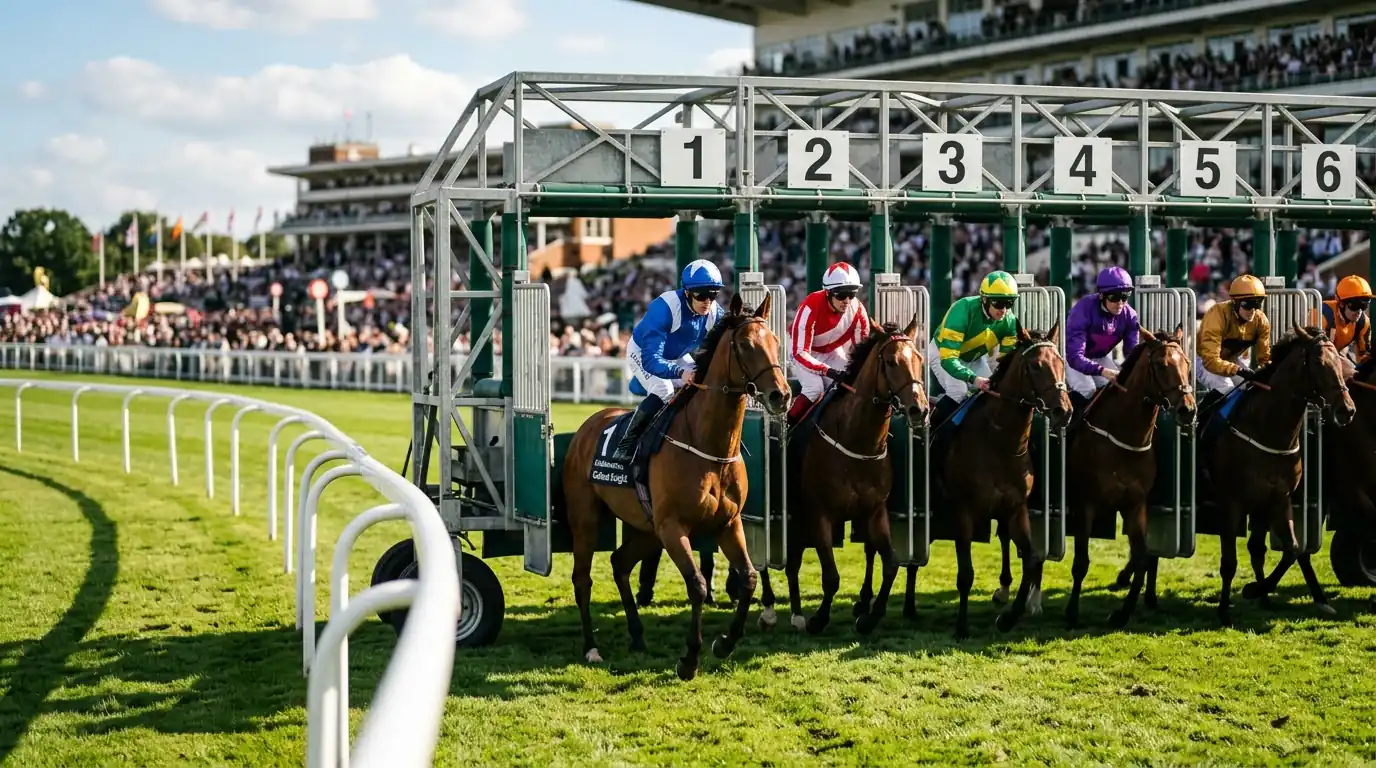
Check six is the draw. For flat races, the draw is the starting stall position, and its impact varies enormously by track and distance. Sprints at Chester, Beverley, Wolverhampton and other tight tracks show pronounced draw effects. Longer races on galloping tracks tend to be more draw-neutral. The check is simple: does today’s draw favour or disadvantage the horse, given the track and distance? If the answer is “strongly disadvantage,” the bet usually shouldn’t be placed regardless of how good the form looks.
Odds, Value and Market Move Checks
The third category deals with the market itself. Getting the analytics right and then taking a poor price wastes the analytical work.
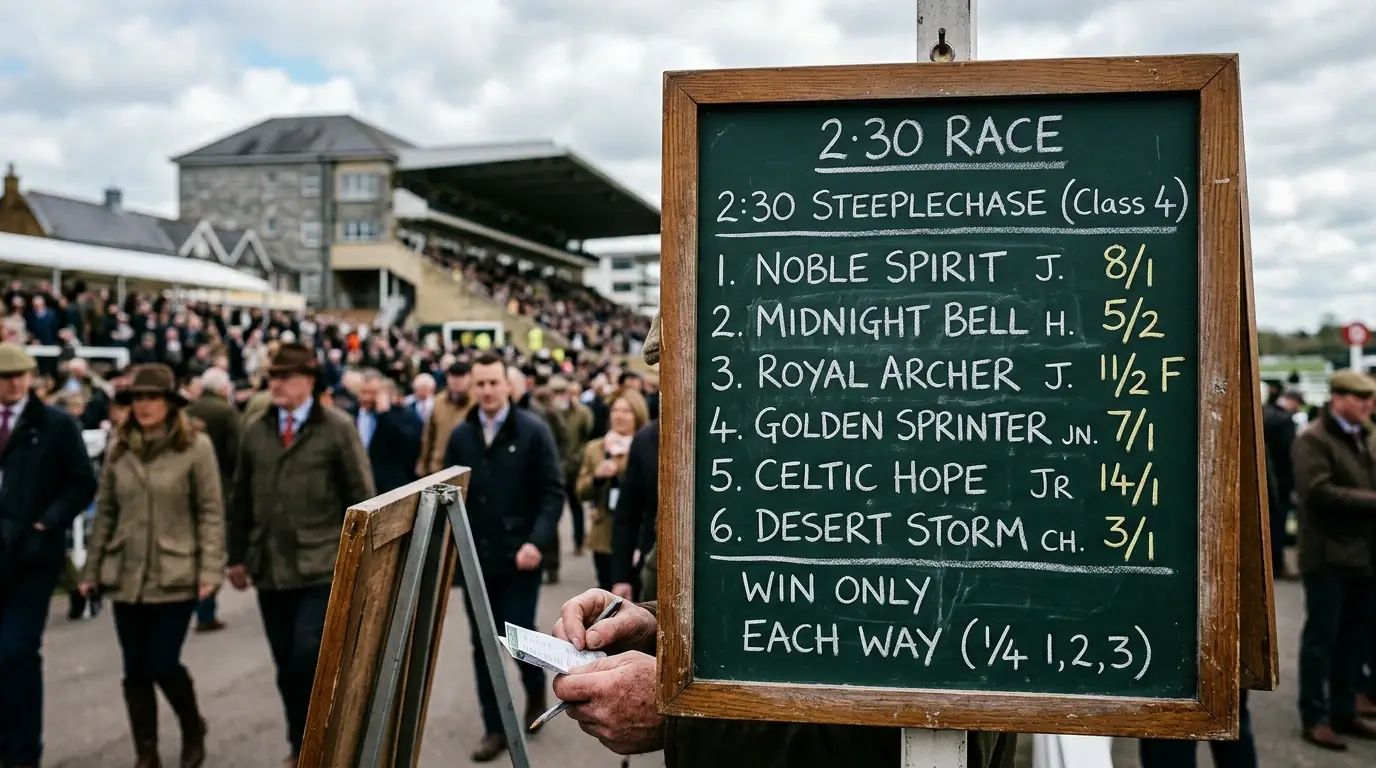
Check seven is implied probability. Convert the current price into a probability percentage in your head before the bet. Decimal odds give the cleanest conversion — one divided by the decimal odds, multiplied by 100. 4.00 implies 25%. 6.00 implies 16.7%. 11.00 implies 9.1%. The question is whether you genuinely believe the horse has a better chance than the implied probability suggests, after allowing for the bookmaker’s overround. If you can’t articulate why your assessment is higher than the market’s, the bet doesn’t have value evidence.
Check eight is the price drift or shortening since the markets opened. A horse that opened at 6/1 and is now 7/2 is being supported by significant money — which may mean stable confidence, late information, or just popular sentiment. A horse that opened at 6/1 and is now 9/1 is being abandoned by the market for some reason. Neither move is automatically informative, but both deserve to be noticed. Bets going against significant market moves need stronger analytical justification than bets going with them.
Check nine is the best price available. UK bookmakers show meaningful price variation race to race. The exchange overround sits at 102 to 105% versus typical bookmaker overrounds of 110 to 125% — the structural cost of betting at fixed-odds operators is materially higher than on Betfair, Smarkets or Betdaq. Across hundreds of bets, the punter who takes systematically better prices earns the entire difference between profit and loss. Backing every UK favourite at level stakes returns roughly 93% of stakes; the bookmaker margin is the difference between a 7% loss and the same selections being profitable at fairer exchange prices. Always check whether a meaningfully better price is available before placing the bet.
Staking and Discipline Checks
The final category is about you, not the horse or the market. The biggest losses in UK racing betting rarely come from bad selections; they come from selections placed with stakes that don’t match the analytical conviction or from selections placed for emotional rather than analytical reasons.
Check ten is stake size relative to bankroll. The stake should fit your normal pattern — typically 1 to 3% of bankroll per bet, scaled up only when the analytical case is unusually strong. If you find yourself wanting to place a stake that’s materially larger than your normal pattern, the question to ask is what’s driving the upsize. If the answer is “I’m sure about this one,” the answer is wrong — confidence is the most expensive emotion in betting. If the answer is detailed analytical reasoning that genuinely supports a higher stake, the upsize may be justified. Most upsizing should be rejected.
Check eleven is emotional state. Am I betting because I’ve done the work and the bet meets my criteria, or am I betting because I’m chasing a loss, riding a hot streak, or filling time on a quiet afternoon? The honest answer determines whether the bet should go on. Bets placed for analytical reasons survive; bets placed for emotional reasons leak money even when they win, because the underlying decision-making isn’t sustainable. The single most useful question to ask before any bet is “would I be placing this if I hadn’t just lost the previous one?”
Check twelve is the daily budget. Have I already hit the loss limit I set before the day began? If yes, no more bets, regardless of how attractive the upcoming card looks. The discipline of a hard daily cap is what prevents bad days from becoming catastrophic. The chasing pattern that destroys bankrolls always starts with the punter ignoring their own pre-set limits because “this one looks too good to miss.” There will always be another good-looking race tomorrow.
Using the Checklist and Building Your Own Version
The twelve items take about three minutes per race once you’ve internalised them. The categories are easier to remember than the specific items — form-and-fitness, conditions, market, discipline — and the items under each category become reflexive over time. The point isn’t to mechanically tick boxes; the point is to make sure you’ve consciously addressed each dimension before committing money.
The checklist also catches the bets you shouldn’t be placing. If three or four items don’t meet your normal criteria — modest recent form, unsuitable going, drifting in the market, stake doesn’t fit your pattern — the cumulative weight of negatives usually means the bet shouldn’t go on regardless of how attractive any single positive looks. The most useful function of a structured pre-race routine isn’t catching the marginal positives; it’s catching the structural negatives that would otherwise slip through.
The corollary discipline is post-race review. The checklist tells you what you considered before the bet; the review tells you whether the analytical case actually worked. Across a hundred bets, the patterns emerge. Which items in the checklist consistently identified winners? Which items got ignored when you placed losers? The feedback loop between checklist and review is where the structural improvement happens.
For deeper context on how the value-assessment portion of the checklist fits into a wider analytical framework, my full guide to value betting in horse racing walks through the expected value formula and overlay identification that underpin the market checks.
The twelve items above are mine. Yours might be different. A punter who specialises in National Hunt staying chases needs different checks than one who concentrates on two-year-old maiden races. The right approach is to start with this template, adapt it to your specialisation, and refine it based on what your monthly bet reviews tell you about where your decisions actually go wrong.
The form of the checklist matters less than the discipline of using it. A scrappy phone note that gets checked before every bet beats an elegant spreadsheet that gets ignored. Start ugly, refine over time, and trust the process more than the in-the-moment instinct that’s trying to convince you the routine doesn’t apply to this particular race. The routine always applies. That’s why it works.
How long should I spend analysing a race before betting?
The form work itself should ideally happen the day or evening before, when there’s no time pressure. The pre-race checklist verification adds another two to three minutes immediately before the bet, focused on confirming current going, late market moves and your own emotional state. If a race genuinely warrants analytical attention, expect to spend 15 to 45 minutes on the underlying form work, then the brief checklist gate before commitment. Races that don’t justify that level of time usually shouldn’t be bet at all.
What is the single most important factor in the pre-race checklist?
Honest emotional state. The form, conditions and market checks all matter, but they only matter if you’re betting from analysis rather than from impulse or chase. A bet placed in the wrong emotional state with perfect form analysis is still a bad bet. A bet placed in the right emotional state with imperfect form analysis is still recoverable. The discipline check at the end of the routine — am I betting because I should be or because I want to be — is the single most reliable filter against the patterns that destroy bankrolls.
Created by the ”Horse Racing bet Strategy” editorial team.