Grand National Betting Strategy: How to Approach the World’s Most Famous Handicap
 Available in US
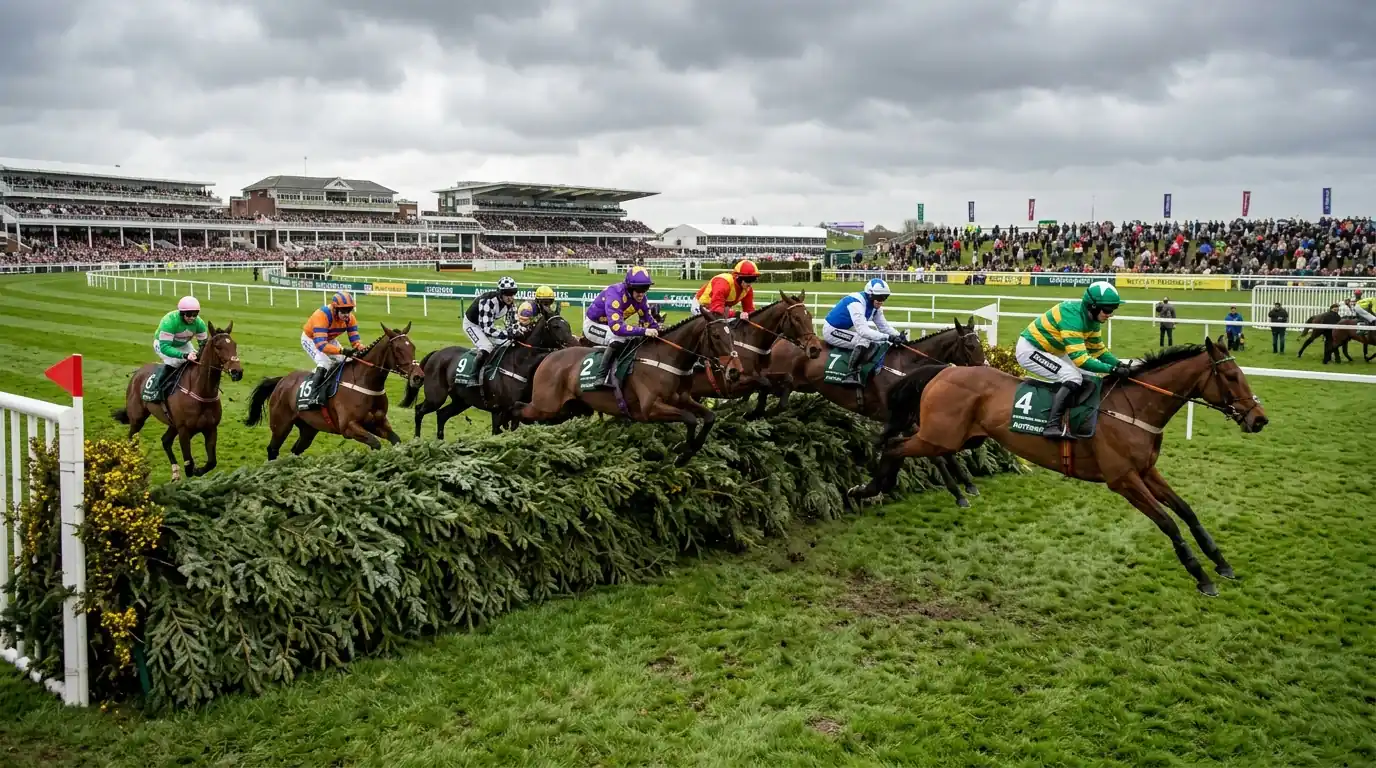
I once asked an old colleague at a Yorkshire bookmakers what was the most expensive race of his career. Without hesitation: “Mon Mome, 100/1, 2009. We laid that horse to half the punters in Sheffield.” The Grand National is the one race in British sport where ordinary people genuinely back outsiders and ordinary people genuinely collect. It’s also the one race where most of those same people lose every other year and don’t notice, because the once-a-decade winner pays for a thousand losing tenners.
The Grand National draws betting volume unlike any other handicap in racing. Aintree’s Grand National Day routinely sees ticket numbers in the hundreds of thousands, and racecourse attendance across all UK fixtures rose to 5.031 million in 2025 — the first time over five million since 2019. A meaningful fraction of that attendance and betting concentration sits in this single afternoon. Approaching the race as just another four-mile handicap is the mistake the casual punter makes. Approaching it with a framework specific to its peculiarities is what separates educated bettors from lottery players.
This guide covers the weight and handicap trends that recur, why each-way and place-only strategies suit a 40-runner field, the winning profile that emerges from the records, and where ante-post versus day-of pricing typically offers value.
Weight and Handicap Trends: What the Records Show
Forty runners. Weights spanning a wide range from top weight down to about ten stone. Two distance challenges most horses have never previously faced. The Grand National’s structural features create patterns that more orthodox handicaps don’t, and those patterns repeat with enough consistency to be useful.
Top weight horses have historically struggled. Carrying 11-10 or more for four and a quarter miles over thirty fences punishes even the best handicappers. The conventional wisdom — back the horse rated highly enough to be taken seriously but not so highly that the weight crushes them — has held up across decades. Most winners in the modern era have carried between 10-5 and 11-2, with a pronounced clustering in the 10-8 to 11-0 range. Horses outside this band have historically required exceptional circumstances to win.
Official ratings work similarly. Modern Grand National winners are typically rated between 145 and 160 in chasing terms. Below 145, the horses generally lack the class to handle the elite competition. Above 160, the weight penalty erodes their chance regardless of class. This rating sweet spot is one of the cleanest filters in Grand National handicapping, and it eliminates a substantial fraction of the field as serious contenders even before any other consideration.
Age has tightened over the years. The modern Grand National is dominated by horses aged eight to eleven. Younger horses tend to lack the experience needed for the unique fences. Older horses — twelve and above — can win but do so at increasingly long odds and often only when conditions align perfectly. The seven and twelve year-old age bands account for relatively few winners despite providing a meaningful share of runners.
What the data emphatically does not support is the popular notion that “the National is a lottery.” It isn’t. The win and place results from the last twenty years show that horses meeting the standard profile — right weight band, right rating band, right age, proven stamina over three and a quarter miles or more, suitable jumping technique on stiff fences — represent the overwhelming majority of placings. The lottery feeling comes from the random factors that decide which qualifying horse wins on the day, not from genuine randomness in the broader pool of contenders.
Each-Way and Place-Only Strategies in a 40-Runner Field
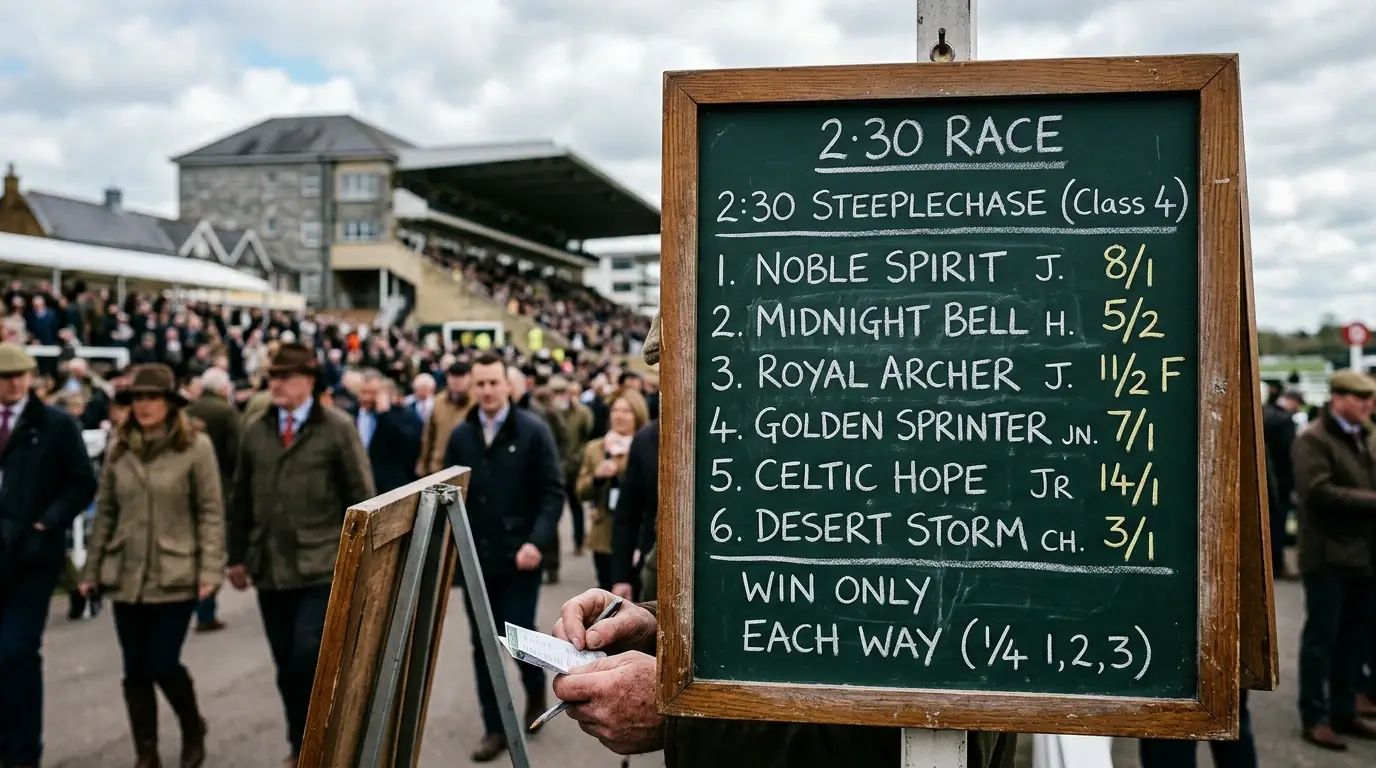
The Grand National is where each-way punters earn their winter. With 40 runners, bookmakers typically pay each-way out to fourth place at 1/4 the odds — and most major firms extend to fifth or sixth places on premium offers around the race itself. Some offer “money back as a free bet” promotions on selected horses, layered each-way enhancements, and similar concessions that materially shift the maths in the punter’s favour.
The base each-way calculation in a 40-runner handicap is genuinely interesting. Second favourites in UK handicap racing finish in the placings about 20% of the time, third favourites 12 to 15%, and the top three in the market collectively finish in the placings 65 to 70% of races. With six places paid on premium offers, the math gets considerably better.
Take a worked example. A horse priced at 16/1, backed each-way for £10. Total stake: £20 (£10 win, £10 place). If the horse wins, total return: £170 win plus £50 place — £220, profit £200. If the horse places (1st through 6th on premium terms), place return: £50 — profit £30 on a £20 stake. If the horse misses the placings: stake lost.
That £30 profit on a place-only result is what makes the bet attractive. Across an entire field of 40 runners with six places paid, the probability of a selected horse running into a place is meaningfully higher than the win odds suggest. A horse priced at 16/1 (implied probability 6%) might genuinely have a 25% chance of placing in a six-place market. The place portion of the each-way bet, taken on its own merits, is the bet doing the heavy lifting in most successful Grand National strategies.
The corollary: the win portion at long prices is often where the loss leaks. A 33/1 each-way bet pays out generously on a win but the place portion is much weaker — the horse is at 33/1 because the form suggests it’s unlikely to be at the sharp end. For most punters, anything past 25/1 each-way crosses into territory where you’re betting on the win alone — and the win at those prices is statistically optimistic in a field that consistently rewards proven horses.
For deeper context on how field size affects each-way mathematics across UK racing, my full guide to each-way betting strategy walks through the 80/20 approach and where place-only value justifies the bet by itself.
The Winning Profile: Age, Experience and Racing History
Look back at the last twenty Grand National winners and a profile assembles itself. The horse is between eight and eleven years old. The horse is rated between 145 and 160. The horse has won over three miles or further. The horse has at least one previous run over stiff fences — Aintree itself, Becher Chase form, or strong staying chase experience at Cheltenham, Sandown, or Haydock. The horse runs in conditions matching its preference — heavy or soft ground horses don’t win on good or firm.
That profile sounds restrictive. It is. But it filters the 40-runner field down to perhaps eight or ten serious contenders, and the eventual winner almost always emerges from that group. The casual approach of “pick a name you like” runs against this filter — the winner is rarely a horse without the profile, and when one does sneak through (Mon Mome at 100/1 in 2009 being the famous exception), it’s an outlier rather than a strategy.
Recent form matters less than the casual punter expects. Grand National winners often come into the race off a single warm-up run, sometimes off no run at all in the calendar year. Trainers explicitly target the race, conserving their horse’s energy through the season. A horse that has run 12 times in the season and is rated 155 is usually compromising its chance through over-racing. A horse rated 150 with two carefully chosen prep races and a clear National target is the textbook profile.
Jockey experience has tightened markedly. Modern Grand National winners are almost exclusively ridden by jockeys with previous Aintree experience — riders who understand the fences, the run from the second-to-last, and the unique tactical demands. A first-time conditional jockey at long odds is the kind of romantic story that produces racing memorabilia, not winners.
Stable form within the meeting matters more than people realise. Trainers who arrive at Aintree with multiple winners across the three-day meeting are usually those whose horses are running to their best — including in the National itself. A trainer who has had a quiet meeting is more likely to have a quiet National. Watch the Thursday and Friday cards before committing serious money on Saturday afternoon.
Ante-Post vs Day-of Pricing: Where Value Sits
The Grand National ante-post market opens in January, sometimes earlier, and the price journey from then to the Saturday afternoon is one of the most interesting in racing. Roughly half the field will be different in March from the field declared in January — withdrawals, injuries, and changed targets reshape the market continually.
Standard ante-post bets carry the standard risk: if your horse doesn’t run, you lose your stake. Most major bookmakers introduce Non-Runner No Bet offers progressively as the race approaches — sometimes six weeks out, sometimes only in the final fortnight. Backing pre-NRNB at long prices and watching the same horse be priced up under NRNB tells you what the market thinks the non-running risk is. A 16/1 horse pre-NRNB priced at 10/1 once NRNB applies has had its non-runner risk implicitly valued at about a 5 percentage point swing.
The optimal ante-post window for the National depends on what kind of bet you’re considering. For dependable, well-targeted horses — animals whose connections have made the National the focus of the season — January and February prices often beat race-day prices by a meaningful margin, especially under NRNB once it’s offered. For speculative bets on emerging horses, the window is the week immediately after their final pre-National prep run, when the form is fresh but the wider market hasn’t yet adjusted.
Day-of pricing comes with the dual advantage of knowing the runners and the disadvantage that all information is in the price. Day-of bets at Aintree are almost always best placed before the morning’s market settles — between 9am and 11am on Saturday — rather than in the final two hours before the off when prices tighten and overrounds widen. Specific each-way enhancements, place extras, and money-back offers from major bookmakers usually peak in the final 48 hours, so a punter willing to do the work has multiple competing offers to compare across the same selection.
One pattern to be wary of: short-priced favourites often drift during the day-of market as professional money takes its already-positioned bets and exits. A favourite shortening early in the morning to 7/2 and drifting to 9/2 by post time isn’t necessarily a value opportunity at 9/2 — it’s the market telling you informed money has finished buying. Backing a horse that has drifted in this pattern is sometimes correct, but it should be a deliberate choice rather than an assumption that drift equals value.
The Annual Framework
The Grand National rewards punters who treat it as a distinct event with its own rules rather than as just another big handicap. The framework I use every year: identify the profile-fitting horses by mid-February. Take ante-post positions on the strongest candidates before the late-February price compression. Hold those positions through to race day. Add small each-way positions on profile-fitting outsiders on the morning of the race, focusing on horses showing improved form in their final prep run.
I don’t bet the favourite by default. I don’t back the most romantic name. I don’t take positions on horses outside the profile because they have “trends” pointing to them. The race rewards seriousness, and the form book is honest enough that the right horse is usually in plain sight.
The Grand National is one race a year. Treat it like the strategic event it is, and it’ll fund several quieter weekends elsewhere in the calendar.
How many places do bookmakers pay each-way in the Grand National?
Standard terms in a 40-runner field are typically four places at 1/4 the odds, and most major UK bookmakers extend to five or six places on premium offers around the race itself. Some firms also offer money-back-as-free-bet promotions and each-way extras that materially improve the maths beyond the base place terms.
What weight range has the best Grand National record?
Modern winners cluster heavily in the 10-8 to 11-2 range, with most coming in around 10-10 to 10-13. Top weights at 11-10 or above have struggled to win in recent decades, and bottom weights below 10-5 generally lack the underlying class to handle the elite opposition over four and a quarter miles.
Written by the editors at Horse Racing bet Strategy.