The Illegal Betting Market in UK Horse Racing: How It Grew 522% and What It Means for Punters
 Available in US
A 522% increase over four years isn’t a trend. It’s a structural transformation. That’s the growth figure for unique visits to unlicensed UK horse racing betting sites between 2021 and 2024, drawn from research presented by the International Federation of Horseracing Authorities. The number landed in 2025 with the weight of confirming what punters and operators had been describing anecdotally for years: the legal market is leaking customers to the black market at a rate that should worry everyone who values protected betting.
The implications are not abstract. UK online horse racing betting turnover has fallen by £1.6 billion across two years, or roughly £3 billion when adjusted for inflation. Levy Board income to support the racing industry depends on legal-market activity; affordability checks designed to protect vulnerable customers don’t apply on illegal sites; the consumer protections enshrined in UK Gambling Commission regulation simply don’t exist outside the licensed perimeter. Knowing what the illegal market actually is — and what you’re giving up if you step into it — has become essential knowledge for any UK punter.
This article unpacks how large the illegal market has become, why punters move to unlicensed operators, what protections are lost in that move, and how government and regulator enforcement is currently working to address the problem.
How Large the Illegal Market Has Become
The IFHA Council on Anti-Illegal Betting research, conducted by James Porteous, examined 22 specific unlicensed sites accepting bets on British horse racing. The headline finding: unique visits to those 22 sites grew by 522% over the four years from 2021 to 2024. Across January to September 2024 alone, those sites attracted more than 600,000 unique visits per month — a substantial volume of betting activity moving outside the regulated framework.
The comparison with the legal market reframes the trend. The same research period showed unique visits to 10 licensed UK bookmaker sites growing by 49% — meaningful growth, but a fraction of the unlicensed-sector expansion. Total visit volume to the unlicensed sites grew by 131% over the period; total visit volume to the licensed sites grew by 25%. The legal market is growing slowly; the illegal market is exploding.
The 22 sites studied are not the entire illegal market. They’re a sample sufficient to demonstrate the trend; the actual illegal-operator universe targeting British racing is larger and harder to enumerate fully. New unlicensed sites appear continuously, often replacing those shut down by enforcement action. The regulatory response is described later in this article, but the headline reality is that the illegal market is dynamic, expanding, and competing aggressively with the legal sector for customer attention.
The economic impact runs through several channels. The £1.6 billion fall in legal turnover (£3 billion inflation-adjusted) represents lost Levy contribution to British racing, lost tax revenue to the Treasury, lost employment in the licensed gambling sector, and lost consumer protection coverage for the punters who’ve moved. Whether that £1.6 billion has all migrated to the illegal market or whether part of it simply represents reduced gambling activity overall is debated within the industry — but the IFHA research strongly suggests a significant fraction of it represents migration rather than abstention.
Brant Dunshea, Acting Chief Executive of the BHA, summarised the trajectory directly: “From the outset of the Gambling Act Review, British racing has repeatedly warned of the unintended consequences of well-meaning policy decisions on our sport, including the threat of inadvertently growing illegal market activity. This study certainly demonstrates that very concerning threat becoming reality.”
Why Punters Move to Unlicensed Operators
The migration to illegal sites isn’t random. It’s driven by a specific set of frustrations with the legal market that unlicensed operators target deliberately. Understanding the push factors helps clarify what’s actually driving the trend, and what would need to change to reverse it.
The most consistent push factor is affordability checks. Customers who hit deposit or loss thresholds at licensed operators are required to provide documentation — payslips, bank statements, tax returns — to continue betting at their preferred levels. For some customers, the documentation requirement is acceptable. For many others, it represents an intrusion that drives them to seek alternatives where no such requirement exists.
The second push factor is account restrictions. Licensed UK operators can and do restrict accounts that consistently win — particularly accounts that appear to be exploiting promotional offers or operating at strike rates suggesting professional approach. Punters facing maximum-stake reductions or outright account closures at licensed operators frequently seek venues where their betting volume is welcomed rather than restricted.
The third push factor is product range. Some unlicensed sites offer betting products that licensed UK operators have withdrawn or never offered — extreme markets on minor races, unusual in-play options, exotic combination bets, or simply prices on events that don’t appear in licensed books. For punters seeking specific products, the unlicensed market provides options the licensed market doesn’t.
The fourth push factor is price competition. Unlicensed sites that don’t pay UK gambling tax, Levy contribution, or regulatory fees can offer marginally better prices and more generous promotional concessions. Grainne Hurst, CEO of the Betting and Gaming Council, put the structural advantage bluntly: “These parasite operators don’t pay tax, don’t care about safer gambling, and do not contribute a penny to the levy.” That cost structure flows through to slightly more attractive headline prices and promotional terms.
The fifth push factor — and the one most often misunderstood — is the perception of better odds. Some unlicensed sites genuinely offer prices a few percentage points above licensed bookmakers on specific events. The percentage advantage is real but typically small, often 1 to 3% on selected markets. For most punters, that price improvement is dwarfed by the protections lost when betting outside the licensed system, but the immediate visible advantage is what registers in the moment of bet placement.
Risks of Betting with Unlicensed Sites
The consumer protections that come with UK Gambling Commission licensing are extensive and largely invisible until they’re needed. Punters typically don’t think about dispute resolution until they have a dispute. They don’t think about ringfenced customer funds until an operator fails. They don’t think about responsible gambling support until they need it. The illegal market’s structural absence of these protections is its most important characteristic.
Brant Dunshea’s framing remains the clearest summary: “For every racing customer that leaves the legal market for the illegal one, they are putting themselves at increased risk with lessened consumer rights and protections.”
The first concrete risk is fund security. Licensed UK operators are required to hold customer balances in segregated accounts and meet specific financial security requirements. If a licensed operator becomes insolvent, customer funds are protected to defined levels. Unlicensed operators have no such requirement. Customers depositing money with an unlicensed operator have no guarantee that the operator will still exist next week, let alone that their balance will be available for withdrawal.
The second risk is dispute resolution. When a bet outcome is disputed at a licensed UK operator, the customer has clearly defined escalation paths — the operator’s internal complaints process, IBAS (the Independent Betting Adjudication Service), and ultimately the Gambling Commission itself. Each level provides a route to resolution backed by enforceable standards. Disputes with unlicensed operators have no equivalent escalation path. The “house decides” — and there’s no appeal.
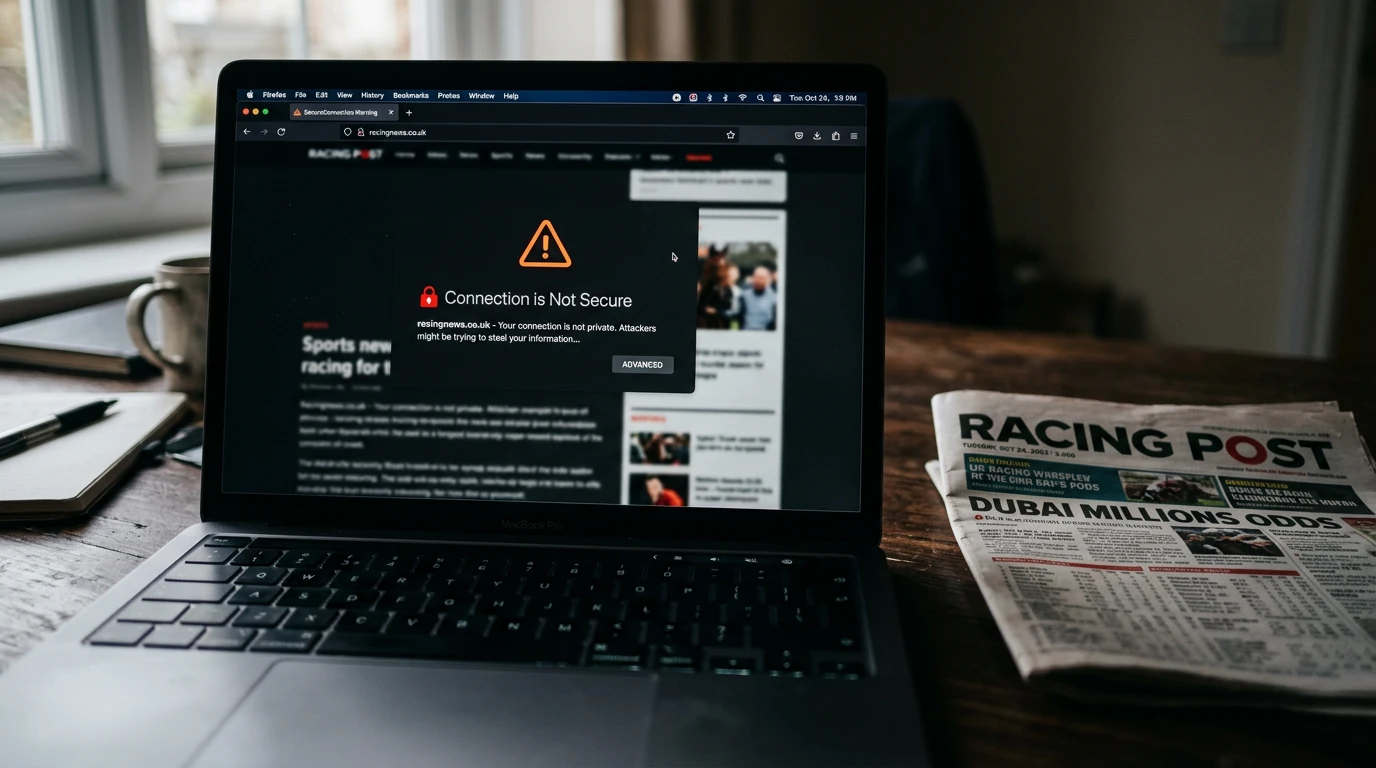
The third risk is identity and financial security. Licensed UK operators are subject to data protection regulations, payment processing standards, and anti-money laundering requirements that govern how customer information is collected, stored and used. Unlicensed operators may or may not apply equivalent standards. Customer details provided to unlicensed sites — including bank account information, identity documents, and gambling activity records — may be stored insecurely, sold to third parties, or used in ways that wouldn’t be legal at a licensed operator.
The fourth risk is responsible gambling support. The Gambling Survey for Great Britain identified 2.7% of UK adults as problem gamblers, with the 18 to 24 age group particularly vulnerable at around 10%. Licensed operators are required to provide deposit limits, self-exclusion options, session timers, and behavioural intervention triggers. GAMSTOP self-exclusion applies across all licensed UK operators. None of these protections extend to unlicensed sites. A vulnerable punter who has self-excluded from the legal market entirely can still bet freely on unlicensed sites — which is the worst possible scenario the licensing framework was designed to prevent.
The fifth risk is the structural absence of Levy contribution. Punters who bet with licensed UK operators contribute indirectly to the funding of British racing through the Levy. The Horserace Betting Levy Board collected a record £108.9 million in the 2024-2025 financial year — its highest figure since the 2017 reform — supporting prize money, integrity services, equine welfare and the wider racing ecosystem. Bets placed with unlicensed operators contribute nothing to that system. Every pound of betting volume that migrates to the illegal market reduces the funding that supports the sport those punters are betting on.
For broader context on how the regulatory environment is changing and what the implications are for legal-market punters, my full guide to UK gambling regulation and horse racing walks through the affordability framework, the Remote Gaming Duty rise and the wider policy direction.
Government and Gambling Commission Enforcement Actions
The enforcement response has scaled significantly since 2024. The Gambling Commission has issued more than 770 cease-and-desist notices to unlicensed operators, taken down 264 sites, and submitted 102,000 URLs to Google for delisting. The Treasury allocated the Commission an additional £26 million in funding specifically targeted at illegal market enforcement. The direction of policy is unambiguous: the government recognises the illegal market as a serious problem and is willing to commit resources to addressing it.
A Gambling Commission spokesperson described the strategic approach: “Our aim is to prevent the illegal market from operating at scale in Great Britain. A significant part of our strategy in doing that is to target our efforts as far upstream as we can.” Upstream targeting means cutting off the supply chains illegal operators rely on — payment processors, advertising networks, hosting services — rather than only pursuing individual sites that pop up after others are shut down.
The political backing is bipartisan. Ian Murray MP, DCMS Minister, was direct: “If someone is operating in the illegal market, we are coming after them — legislatively, regulatorily and with money.” Louie French MP, Conservative Shadow Minister for Sport and Gambling, raised the corresponding concern from opposition: “The rise in black market gambling should be a concern for all. It was entirely predictable, and the government urgently needs to start listening.”
The honest assessment is that enforcement is necessary but unlikely to be sufficient alone. Illegal operators evolve faster than enforcement can shut them down. Without addressing the push factors driving migration — affordability friction, account restrictions, tax-driven margin compression — enforcement will continue to be reactive rather than preventive.
Choosing the Legal Market Anyway
The case for staying within the licensed UK market remains strong despite the visible advantages unlicensed sites offer at the surface. The protections — fund security, dispute resolution, responsible gambling support, data security, Levy contribution — are not abstract benefits. They are concrete safeguards that matter at specific moments, even though those moments may be rare in any individual punter’s experience.
The framework I use for evaluating any offshore site is simple: would I accept the same terms from a UK high-street operator I’d never heard of, with no licence, no public address, no UK regulatory oversight, no documented dispute process, no protected funds? Framed that way, the answer is obvious. The fact that the site is online and accepts UK customers doesn’t change the underlying question.
The price advantages that unlicensed operators offer typically run to 1 to 3% on selected markets. The structural protections licensed operators provide are worth substantially more than 3% across any meaningful betting career. The maths is one-sided once you factor in the genuine probability of bet disputes, operator failures, or responsible gambling interventions that the licensed system covers and the illegal system doesn’t.
Stay licensed. Verify the operator’s licence number before opening an account. Use the Gambling Commission’s public register to confirm authorisation. Treat any site that’s slow to display licensing information as exactly the kind of operator the licensing framework was created to protect customers from.
How can I check if a horse racing betting site is legally licensed in the UK?
Every licensed UK gambling operator must display its licence number prominently, usually in the footer of every page. Cross-reference that number against the Gambling Commission’s public register of licensed operators. If the licence number isn’t displayed, can’t be verified, or refers to a regulator other than the UK Gambling Commission (offshore licences from Curacao, Costa Rica or similar jurisdictions don’t provide UK-equivalent protection), treat the site as unlicensed for UK regulatory purposes.
What protections do I lose by using an unlicensed operator?
Several material ones. Customer fund security, escalation rights through IBAS and the Gambling Commission for disputes, GDPR-equivalent data protection, GAMSTOP-aligned responsible gambling tools, anti-money laundering procedures, and indirect Levy support for British racing. The headline price advantage offered by unlicensed sites is typically 1 to 3% on selected markets — a small benefit relative to the protections forfeited.
Written by the editors at Horse Racing bet Strategy.