Each-Way Betting Strategy: The 80/20 Rule, Place-Only Value and Field-Size Triggers
 Available in US
Table of Contents
- How Each-Way Betting Works: Mechanics and Place Terms
- The 80/20 Each-Way Strategy Explained
- Field Size and Place Terms: Finding the Sweet Spot
- Best Race Types for Each-Way Punters
- Each-Way Doubles, Trebles and Patent Bets
- Best Odds Guaranteed and Each-Way Extra Offers
- When Each-Way Betting Costs You Money
- Frequently Asked Questions
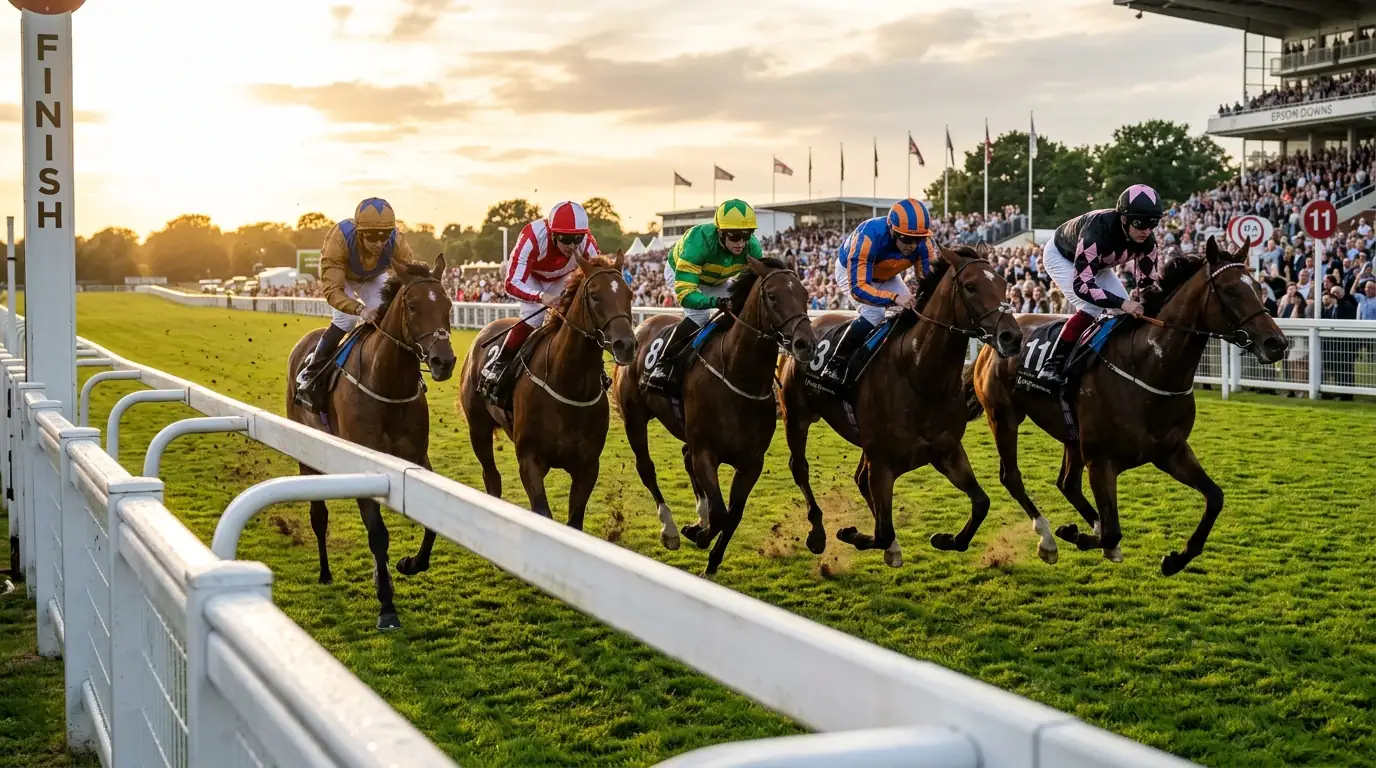
My most profitable single bet last year was not a winner. It was a horse that finished third at 20/1 in a 16-runner handicap at York. The win part of my each-way bet lost, but the place part returned over four times my total stake. That is the power of each-way betting when it is used as a precision tool rather than a safety blanket — and the difference between those two approaches is what this entire guide is about.
Each-way betting is the most popular bet type in UK horse racing for good reason: it gives you two chances of a return from a single selection. But most punters use it indiscriminately, slapping each-way on every bet without considering whether the place terms, the field size, and the odds actually create value on the place portion. Used carelessly, each-way betting doubles your stake without doubling your edge. Used strategically, it exploits structural pricing inefficiencies in the place market that bookmakers build into their odds.
Favourites win around 30-35% of UK races, but the top three in the betting finish in the first three positions 65-70% of the time. That gap between the favourite’s win rate and the collective place rate of the top market positions is where each-way value lives. This guide covers the mechanics, the 80/20 strategy, place-only value calculations, field-size triggers, the best race types for each-way punters, and how regulatory changes in 2026 may affect the offers that make each-way betting even more attractive.
How Each-Way Betting Works: Mechanics and Place Terms
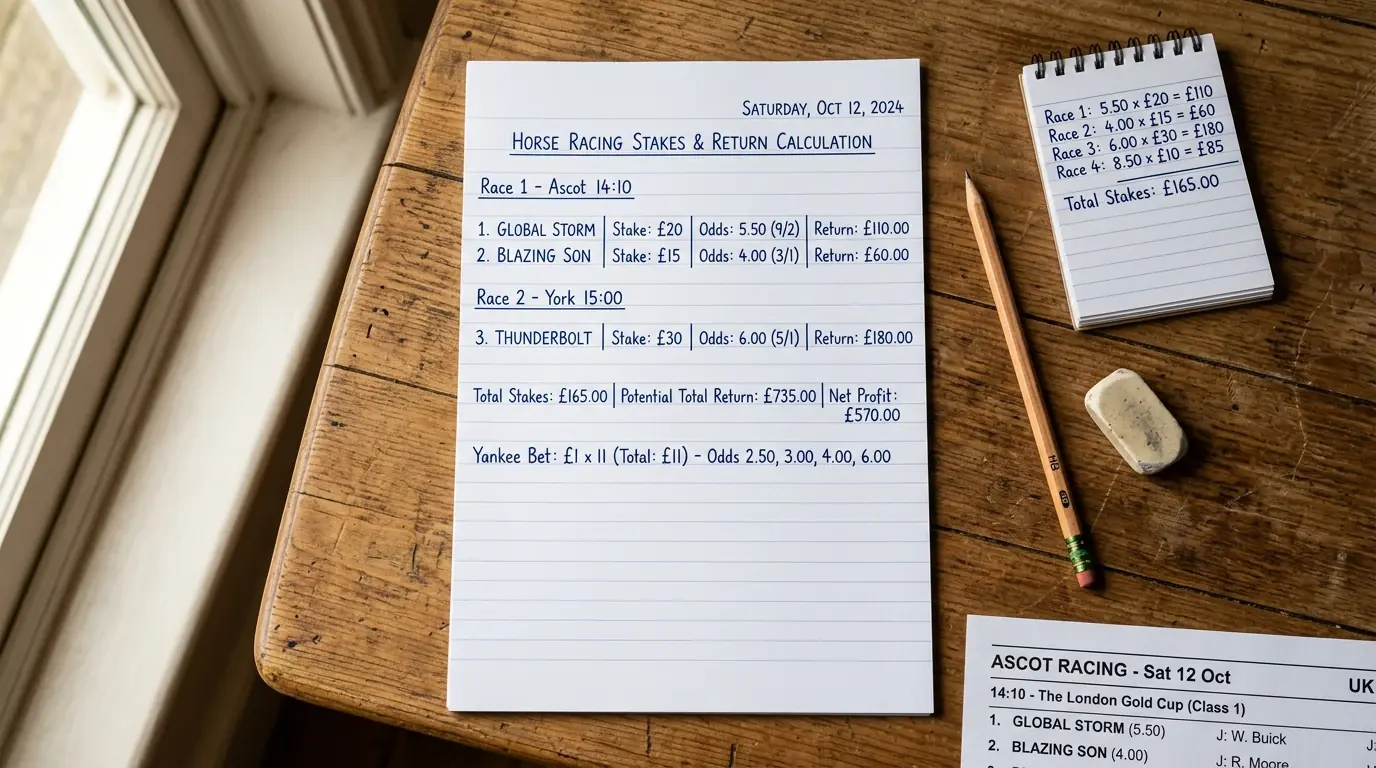
An each-way bet is two separate bets of equal value: a win bet and a place bet. If you stake ten pounds each-way, your total outlay is twenty pounds — ten on the horse to win and ten on the horse to place. This is the first thing every each-way bettor needs to internalise, because it changes the economics of every decision. Your true stake is double what you think of as your “bet.”
The place terms depend on the number of runners and the type of race. In races with 5-7 runners, bookmakers typically pay the first two places at 1/4 of the win odds. In races with 8-15 runners, they pay the first three at 1/5 of the win odds. In handicap races with 16 or more runners, they pay the first four at 1/4 of the win odds. Some bookmakers offer enhanced place terms on selected races — paying five or six places in big-field handicaps — but the standard terms above are the baseline you should assume when calculating value.
How the payout works in practice: say you back a horse each-way at 10/1 in a 12-runner race. Place terms are 1/5 odds, first three places. If the horse wins, you collect 10/1 on the win part (100 pounds from a 10-pound stake) plus 2/1 on the place part (20 pounds from a 10-pound stake), for a total return of 140 pounds on a 20-pound outlay. If the horse finishes second or third, the win bet loses and the place bet pays 2/1 — a return of 30 pounds on a 20-pound outlay, giving you a 10-pound profit. If the horse finishes fourth or worse, both bets lose and you are down 20 pounds.
The critical insight is that the place part of the bet has its own implied probability and its own value equation, completely independent of the win part. You can have a losing each-way bet where the place portion alone was profitable over time. This separation is the foundation of every advanced each-way strategy.
The 80/20 Each-Way Strategy Explained
The 80/20 each-way strategy is the most commonly cited approach in the niche, and for good reason — it isolates races where the place portion of the bet carries disproportionate value. The name refers to a rough threshold: you are looking for situations where you believe a horse has roughly a 20% chance of winning but closer to an 80% chance of placing. When that gap is wide enough, the place portion of the each-way bet can be value even if the win portion is marginal or negative.
Where does that gap come from? Competitive handicaps with large fields. In a 20-runner handicap where bookmakers pay four places, you might assess a horse at 20% to win (5/1 fair odds) but 55-60% to place in the first four. If the available price is 10/1 with 1/4 place odds, the place portion pays 5/2 — implied probability of 28.6%. Your assessed place probability of 55-60% is almost double the implied probability. That is a massive overlay on the place bet, and it exists because bookmakers do not price the place market independently; the place odds are mechanically derived from the win odds.
The 80/20 label is slightly misleading because the exact numbers vary. The real principle is: when a horse’s place probability significantly exceeds the implied place probability from the each-way terms, the bet has value even if the win portion does not. I have found the sweet spot to be horses priced between 8/1 and 20/1 in fields of 14 or more runners, where my assessed place probability is at least 15 percentage points above the implied place probability. Below 8/1, the place odds are too short to generate enough return. Above 20/1, the horse’s overall chance is so low that even a generous place assessment struggles to justify the double-stake outlay.
Calculating Each-Way Value: When the Place Bet Alone Pays
The maths here is simpler than it sounds. To find out whether the place portion alone justifies the total each-way stake, calculate the expected value of the place bet in isolation. Take your assessed place probability, multiply it by the place odds payout, then subtract the probability of missing the places multiplied by the stake.
Example: a horse at 12/1 in a 16-runner handicap (1/4 odds, four places). Place odds are 3/1. You assess the horse as having a 40% chance of placing in the first four. EV of the place bet = (0.40 x 3) – (0.60 x 1) = 1.20 – 0.60 = +0.60 per pound. That is a strongly positive expected value on the place bet alone. Even if the win bet has zero edge, the combined each-way bet is profitable because the place portion more than compensates.
Now consider the same horse in a race with only 10 runners, where terms are 1/5 odds and three places. Place odds drop to 12/5 (2.4/1). Your assessed place probability for the top three is maybe 30%. EV = (0.30 x 2.4) – (0.70 x 1) = 0.72 – 0.70 = +0.02. Barely positive. The value has almost vanished because the place terms are less generous and the horse has fewer places to target. Same horse, same form, but the structural terms of the bet have killed the edge.
This calculation is why I say each-way betting is a precision tool. The same selection can be strong value each-way in one race and poor value each-way in another, depending entirely on the number of runners and the place terms. Second favourites win around 20% of UK races, and third favourites win 12-15% — numbers that inform how likely a horse is to place when you combine multiple runners’ chances of filling the frame. Always run the place value calculation before committing to an each-way stake.
Field Size and Place Terms: Finding the Sweet Spot
Field size is the single biggest determinant of each-way value, and it is the variable I check first before considering any each-way bet. The reason is mechanical: larger fields unlock better place terms, more places paid, and wider spreads between the win probability and the place probability of mid-market runners.
In a five-runner race with two place positions, each-way betting is almost never worthwhile. Your horse needs to finish in the top 40% of the field to trigger the place payment, and the place odds at 1/4 of the win odds are rarely generous enough to compensate for the total double-stake outlay. At the other extreme, a 20-runner handicap paying four places at 1/4 odds creates a much more favourable dynamic — your horse only needs to finish in the top 20% of the field for the place to pay, and the place odds on a 14/1 shot (3.5/1 place) are often excellent value.
My threshold: I rarely bet each-way in races with fewer than 12 runners unless the horse is priced at 14/1 or above. In races with 12-15 runners (three places, 1/5 odds), I look for horses at 10/1 or higher. In races with 16+ runners (four places, 1/4 odds in handicaps), I will consider each-way bets down to 8/1. These thresholds are not rigid rules but guidelines that have held up across several thousand bets in my records.
Non-runner declarations can destroy each-way value overnight. A race that was a 16-runner handicap at declaration time might be 13 runners by race day, dropping from four place positions to three and shifting terms from 1/4 to 1/5. I always recheck the field size and place terms on the morning of the race, not just at the time I identify the selection. If the field has shrunk below my threshold, I either switch to a win-only bet or withdraw entirely.
Best Race Types for Each-Way Punters
Not all races are created equal for each-way punters. The ideal race has a large field, competitive form across the field, and at least one factor (going change, class drop, draw advantage) that gives your selection a place chance the market has not fully priced in.
Big-field flat handicaps are the bread and butter. Heritage handicaps — the Cambridgeshire, the Cesarewitch, the Wokingham, the Stewards’ Cup — regularly field 20+ runners with 1/4 place odds and four or more places paid. These races attract horses from a wide range of abilities, and the sheer volume of runners means that mid-market horses priced between 10/1 and 25/1 often have better place chances than their prices imply. Favourites win only about 25.7% of handicaps, well below the 30-35% average for all race types, which spreads the probability more evenly across the field and benefits each-way bettors.
National Hunt handicaps over longer distances — the big three-mile handicap chases and the championship hurdles — are also fertile ground. The distance and jumping element increase the variance of outcomes, which means that horses with solid form but shorter prices rarely dominate as comprehensively as they do in five-furlong flat sprints. The attrition rate in long-distance chases means that simply getting round safely puts a horse in contention for a place, and horses with strong jumping records and proven stamina offer a reliable place probability that the market often underrates.
Races to avoid for each-way: small-field conditions races (under 8 runners), Group 1 flat races dominated by one or two outstanding horses, and novice hurdles where a well-regarded newcomer is odds-on and everything else is 20/1 or longer. In those races, the place market is either too tight to offer value or the probability distribution is too skewed toward the favourite for mid-market each-way bets to work. For more on handicap betting mechanics and how ratings shape the field, that guide covers the structural detail.
Each-Way Doubles, Trebles and Patent Bets
Each-way multiples — doubles, trebles, and full-cover bets like Patents and Lucky 15s — add a layer of complexity and, for many punters, a layer of excitement that single bets cannot match. The mechanics are the same as a regular each-way bet but applied across multiple selections: each leg has a win part and a place part, and the returns compound across legs.
An each-way double consists of four bets: a win double, a win-place cross, a place-win cross, and a place double. If both horses win, all four bets pay. If both horses place but neither wins, only the place double pays. The permutations mean that each-way doubles offer a surprising number of return scenarios compared to straight win doubles, where both selections must win for any payout.
Patent bets (seven bets across three selections: three singles, three doubles, one treble, all each-way) and Lucky 15s (fifteen bets across four selections) take this further. These bets are expensive — a one-pound each-way Lucky 15 costs 30 pounds — but they protect against the pain of having three winners and one loser in an accumulator. The Lucky 15 pays on any combination of results, and many bookmakers offer consolation bonuses (double odds on a single winner, for instance) that can tilt the value if you qualify.
My view on each-way multiples is cautious. The compounded overround across multiple legs erodes value quickly, and the total stake is always larger than it looks. I use each-way doubles sparingly, targeting two selections that I believe have genuinely high place probabilities in their respective races. Full-cover bets like Patents and Lucky 15s I treat as occasional speculative plays during festival meetings, where the number of big-field handicaps and competitive races creates a natural hunting ground for multiple each-way selections on a single card. At any other time, singles are cleaner and more accountable.
Best Odds Guaranteed and Each-Way Extra Offers
I once backed a horse each-way at 16/1 on the morning of the race, watched it drift to 20/1 by the off, and then watched it win. Under normal circumstances, I would have been paid at my original 16/1. But because I had taken the price with a bookmaker offering Best Odds Guaranteed — BOG — I was paid at the larger Starting Price of 20/1. That single upgrade turned a good result into an outstanding one, adding an extra forty pounds to my return from a ten-pound each-way stake.
BOG is the single most valuable promotional feature for each-way punters. It works like this: if you take a price early and the Starting Price is higher, the bookmaker pays you at whichever is greater. The upgrade applies to both the win and place portions of an each-way bet, which means the place odds increase proportionally. On a horse that drifts from 12/1 to 16/1, your place odds in a 16-runner handicap (1/4 terms) jump from 3/1 to 4/1. That is a significant improvement in your place return, entirely free.
The strategic implication is clear: BOG removes the downside risk of taking an early price. Without it, betting early carries the risk that the price will lengthen and you will be stuck on shorter odds than the market eventually offered. With BOG, you get the best of both worlds — if the price shortens, you have locked in value; if it lengthens, you get the upgrade. This means you should always take early prices when BOG is available, rather than waiting for the Starting Price.
Each-Way Extra promotions work differently. Some bookmakers offer enhanced place terms on selected races — paying five or six places instead of the standard three or four, or offering 1/4 odds instead of 1/5 on races that would normally carry the tighter terms. These enhancements can dramatically shift the value calculation. A horse at 10/1 in a 12-runner race with standard 1/5 place terms pays 2/1 on the place. If a bookmaker offers 1/4 place terms on the same race, the place odds jump to 5/2 — a 25% increase in the place payout. Run the EV calculation on both and the difference is stark.
The exchange market handles each-way differently altogether. Betting exchanges allow you to back and lay the place market independently, separating it entirely from the win market. Exchange new bets arrive roughly every 50 seconds with around 10 participants per market, and this liquidity means you can often find better place odds on the exchange than the derived place odds from a bookmaker’s each-way terms. If you are comfortable using exchanges, comparing the bookmaker’s each-way place odds against the exchange place market before every bet is a habit that adds percentage points to your long-term return.
When Each-Way Betting Costs You Money
Each-way betting is not always the right choice, and knowing when to avoid it is as important as knowing when to use it. The most common mistake I see is backing short-priced horses each-way in small fields. A horse at 4/1 in a 7-runner race with 1/4 place terms pays evens on the place — and you are staking double to get that safety net. If the horse has a 25% chance of winning and a 55% chance of placing, the place EV is (0.55 x 1) – (0.45 x 1) = +0.10. That is a thin edge for twice the outlay, and the win portion at 4/1 with a 25% assessed probability gives EV of (0.25 x 4) – (0.75 x 1) = +0.25. A win-only bet at half the total stake would be more capital-efficient.
The 2026 racing landscape adds another consideration. The British horse population has been declining, with projections of a 6-7% drop in horse numbers between 2024 and 2027. Richard Wayman, the BHA’s Director of Racing, has described this as “the single biggest challenge facing British racing” — and fewer horses means smaller fields, which directly reduces each-way opportunities. Races that used to attract 16 runners might now have 12, shifting place terms from four places at 1/4 to three places at 1/5. Keep this structural trend in mind when assessing your each-way strategy for the season ahead.
The bottom line: each-way betting is a specialist tool for specific conditions, not a default setting. Use it when the place terms, field size, and your assessed place probability create genuine value on the place portion. Avoid it when the field is small, the odds are short, or the maths says a win-only bet would generate better returns per pound risked.
Frequently Asked Questions
What is the best odds range for each-way betting?
The sweet spot for each-way bets is typically between 8/1 and 20/1 in fields of 14 or more runners. Below 8/1, the place odds are too short to generate meaningful returns on the place portion. Above 20/1, the horse’s overall chance is so low that the double-stake outlay rarely justifies the risk. Within this range, the gap between win probability and place probability is wide enough to create genuine value on the place bet.
How do I calculate whether the place part of an each-way bet is value?
Calculate the expected value of the place bet in isolation. Multiply your assessed place probability by the place odds payout, then subtract the probability of missing the places multiplied by the stake. For example, if you assess a horse as having a 40% chance of placing at 3/1 place odds: (0.40 x 3) – (0.60 x 1) = +0.60 per pound. Any positive result means the place portion alone has value.
Should I always bet each-way instead of win-only?
No. Each-way betting doubles your total stake, so it only makes sense when the place portion carries genuine value. In small fields under 10 runners, or when backing horses at short prices below 6/1, a win-only bet is usually more capital-efficient. Each-way is a precision tool for large-field handicaps and competitive races, not a default setting for every bet.
Do each-way terms change if horses are withdrawn?
Yes. Non-runner withdrawals can reduce the field size and change the place terms. A race declared as a 16-runner handicap with four places at 1/4 odds might become a 13-runner race with three places at 1/5 odds after withdrawals. Always recheck field size and place terms on race morning before committing to an each-way stake.
Published by the Horse Racing bet Strategy team.