Cheltenham Festival Betting Strategy: Key Trends, Market Patterns and Ante-Post Angles
 Available in US
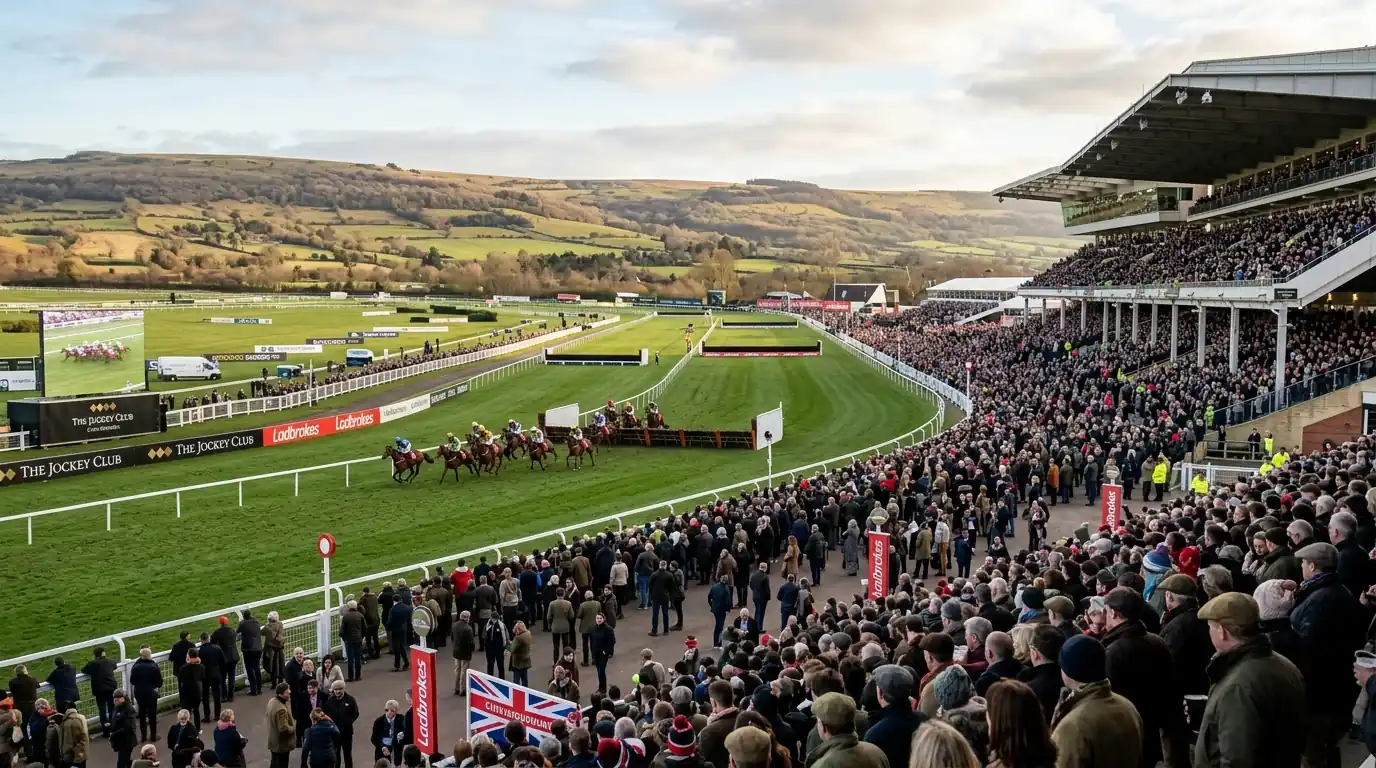
The Cheltenham roar that goes up when the tape rises for the Supreme Novices’ Hurdle on Tuesday afternoon is the closest thing British sport has to a religious experience. It’s also the moment that finalises about six months of ante-post positioning across thousands of punters’ books, and the moment the gulf between informed Cheltenham bettors and tourists becomes brutally clear.
Cheltenham draws a peak television audience of 1.8 million on Gold Cup Day and generates more concentrated betting volume in four days than most racing weekends produce in a fortnight. That intensity creates patterns that don’t exist elsewhere on the calendar — sharper money, deeper markets, and a level of media scrutiny that exposes both genuine angles and overhyped narratives. Understanding those patterns is the difference between a Festival that pays for itself and one that doesn’t.
This article unpacks the statistical trends that repeat year after year at the Festival, where ante-post pricing genuinely offers value rather than just risk, which races have the strongest betting characteristics, and how Cheltenham markets move in the final 48 hours before the off.
Statistical Trends That Repeat Year After Year
The first thing every Cheltenham punter learns — usually after losing money — is that the Festival has its own rhythms. Trends that hold across decades aren’t coincidence. They’re the product of how the meeting is built, who breeds horses for it, and what the courses reward.
The single most consistent angle is Irish dominance over the last twenty years. The numbers vary year to year but the direction doesn’t: Irish-trained horses now win disproportionately more Festival races than their entry numbers alone would predict. The reason is structural — Irish prize money, Irish breeding programmes, and the concentration of National Hunt talent at a handful of elite Irish yards have produced a generation of horses purpose-built for Cheltenham gradient and Cheltenham ground. The lesson for a betting strategy isn’t “back every Irish runner” — it’s “treat the Irish form book as the highest-quality form line at the Festival, and read it carefully before placing bets on UK-trained alternatives.”
The second trend that holds across nearly every Festival is the dominance of horses that have already shown form at the track. Cheltenham is a specialist’s course — the undulations, the uphill finish, the demand for stamina at speed — and horses that have proven they handle it tend to repeat. Course form trumps recent form when the two conflict. A horse with one Cheltenham course win and a poor recent result is usually a better bet than a horse with great recent form but no course experience.
The third trend concerns favourites. Festival favourites win at a rate higher than the UK average — closer to 35% than the typical 30 to 32% — but the win rate masks an important variance. Festival favourites that came into the meeting with consistent form, clean ground preferences, and a course profile are the favourites that produce the strongest returns. Festival favourites pushed up the market by media coverage and Gold Cup-week hype, without the form profile underneath, lose at rates that punish their backers. The market sometimes confuses excitement with quality, and Cheltenham is the meeting where that confusion compounds.
The fourth trend is the value bias at moderate prices. Outsiders at 33/1+ at Cheltenham underperform their odds even by the standards of the wider longshot bias in racing. The 8/1 to 15/1 band, by contrast, has historically produced positive ROI in selected races — particularly the big-field handicaps on Tuesday and Wednesday and the Champion Hurdle/Champion Chase undercards. Targeting this band on form rather than backing rags or piling into favourites is the simplest framework for Festival betting.
Ante-Post Angles: When Early Prices Offer Genuine Value
Ante-post betting at Cheltenham is where fortunes are made and lost. The available prices in October, November and December can be wildly different from prices on the morning of the race. Get the timing right and a 16/1 ante-post bet can be a 5/1 morning price by race day. Get it wrong and your selection withdraws, leaving you with nothing.
The non-runner rule is the heart of ante-post strategy. Standard ante-post bets are lost stakes if the horse doesn’t run. Non-Runner No Bet (NRNB) offers — which most major bookmakers introduce as the meeting approaches — refund stakes if the horse is withdrawn. The transition from standard ante-post to NRNB typically happens around six to eight weeks before the meeting for the big races and in the final two to three weeks for everything else. Backing a horse pre-NRNB at 20/1 and watching the same horse price up at 8/1 once NRNB is offered tells you something about how the market views non-runner risk.
The optimal entry windows depend on what kind of horse you’re backing. For dependable, well-established Festival regulars — horses that have proven they handle Cheltenham and whose connections clearly target the meeting — early ante-post (October to December) often offers strong prices that compress steadily towards race day. The risk of withdrawal is real but contained: these are horses being campaigned with the Festival in mind, and unless they meet a serious problem they’ll line up.
For improvers — younger, lightly-raced horses that the market hasn’t fully assessed — the value window is usually January and early February, after their final trial run but before the Festival betting hits its frenzy. These horses are the ones whose prices compress most dramatically in the final fortnight as Cheltenham fever builds. Backing them at 16/1 in February might mean watching them go off at 6/1 in March.
The dangerous zone is the final week. By that point, every angle that the public can see is in the price. Late ante-post bets at apparently attractive prices usually carry hidden information you don’t have — possible non-running, ground concerns, late changes in target. The professionals I know either bet early or bet on the day. The middle ground between those two approaches is where most expensive mistakes happen.
One specific angle that has produced returns for me repeatedly: the second favourite in the Champion Hurdle and Queen Mother Champion Chase markets in early February. Both championship races consistently produce winners from outside the top of the betting, and the second favourite often drifts in late February as the market fixates on the leader. Backing the second favourite at the moment of maximum drift and laying back closer to the off, on the exchange, has been a workable trade in roughly four out of seven recent renewals of each race.
Key Races and Their Betting Characteristics
Not all 28 Festival races are bettable. Some are too unpredictable for serious money. Others are gift opportunities for punters who know the patterns. Treating the meeting as a single block rather than 28 distinct propositions is the single most common mistake at Cheltenham.
The Supreme Novices’ Hurdle on Tuesday afternoon is the meeting’s opening race and one of its hardest to bet. The runners are typically first-season hurdlers with limited form on display, the field is large, and trainers often save their best for first runs at the Festival. Outsiders win this race more frequently than most other Festival novice events. My personal rule: if I’m betting the Supreme, it’s each-way at 8/1 to 15/1 on a horse with proven form on Cheltenham-style undulating tracks, never win-only on the favourite.
The Queen Mother Champion Chase on Wednesday is the meeting’s most consistent favourite-winning race. Two-mile chasing rewards the same handful of elite horses year after year, and the form book has historically been a reliable guide. Wednesday is the day to consider favourites and short-priced contenders with more confidence than Tuesday or Thursday afford.
The Pertemps Network Final on Thursday — a three-mile handicap hurdle with twenty-plus runners — is a textbook each-way opportunity. Field sizes routinely justify four places of place-terms, sometimes more on premium offers around big handicaps. Targeting a horse with form on the going, proven stamina, and a price in the 10/1 to 20/1 band produces genuine each-way value when the place portion alone repays much of the win-only loss.
The Cheltenham Gold Cup on Friday is the championship event, and the market is sharper for it than for almost any other race in the British calendar. By Gold Cup day the price has absorbed every available angle. Public information is fully priced. Edge in this race comes from interpretation, not data — recognising that a particular horse handles soft ground better than its formula form line suggests, or that a tactical setup favours a particular runner. Backing the favourite blind because it’s the favourite is mistaking the market’s confidence for your own analysis.
How Cheltenham Markets Move in the Final 48 Hours
The final 48 hours before the Festival starts are not like any other betting window in the British calendar. Money pours into the markets at a rate that resembles a stock market rather than a sporting event. Watching how prices move during this window — and reading what those moves mean — is itself a skill that takes time to develop.
The exchange dynamics intensify markedly. In normal weeks, UK exchange markets show new bets matching roughly every 50 seconds with an average of around ten participants per market. In the 48 hours before Cheltenham, those figures escalate sharply — matching frequency increases, participation deepens, and individual bet sizes grow as professional money moves into position. The Festival markets are the most liquid weeks of the National Hunt calendar.
The pattern that recurs year after year: short-priced favourites tend to drift slightly in the final 24 hours as informed money exits positions taken earlier in the season. The same money often reappears on the second or third favourite, supporting prices that look comparatively stable while the favourite weakens. A favourite drifting from 5/2 to 3/1 in the final morning, while the second favourite holds at 9/2 throughout, is a market suggesting the close-form analysis isn’t quite as bullish on the leader as casual money assumes.
Information disadvantage matters most in this window. Most punters won’t have access to the same insight that professional money is acting on. The practical implication is that betting on the day, on impulse, against price moves that you can see but can’t explain, is almost always a mistake. If a horse you fancied at 8/1 in February has come into 4/1 by Tuesday morning, the value you initially saw is largely gone — and chasing that horse at 4/1 because you “fancied it” weeks ago ignores everything the market has since learned.
For the related question of when ante-post pricing in general makes sense, my full guide to ante-post betting in horse racing goes deeper on timing and NRNB strategy across the wider racing calendar.
The Practical Festival Framework
Cheltenham is a meeting that rewards preparation and punishes improvisation. The punters I know who consistently profit from the Festival arrive on Monday evening with their bets effectively already placed in spirit, even if they’re waiting for confirmation of the going and the runners. They’ve done the form work, identified their targets, secured their ante-post prices where appropriate, and identified the in-running situations they’ll consider on the day.
What they don’t do is wake up Tuesday morning and try to find winners in races they haven’t studied. The Festival is too information-rich and the markets too sharp for casual analysis to compete. Two hours of preparation in February beats six hours of frantic study on Tuesday morning, every single time.
Pick your battles. Bet your strongest opinions, not every race. Let the favourites you don’t fully believe in win without your money. The Cheltenham years that have paid me back have been the years I bet six races across four days — never twenty.
When is the best time to back an ante-post Cheltenham selection?
The optimal window varies by horse type. For established Festival horses with proven course form, October to December often offers prices that compress steadily towards race day. For improvers being campaigned towards the Festival, January and early February — after the final trial — typically produce the strongest value before the late-February price compression kicks in.
How do Irish-trained runners perform statistically at Cheltenham?
Irish-trained horses have dominated recent Festivals at rates well above their share of the entries. The structural reasons are real — Irish prize money, breeding programmes, and elite yards have concentrated National Hunt talent there. Treat the Irish form book as the highest-quality form line at the Festival rather than as a separate category to ignore or follow blindly.
Created by the ”Horse Racing bet Strategy” editorial team.